
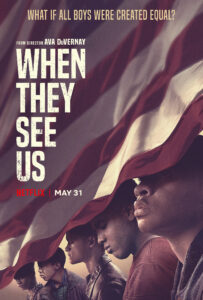
Coming to Netflix globally on May 31st is director Ava DuVernay’s four-part Netflix series When They See Us, formerly known as Central Park Five.
Based on a true story that gripped the country, When They See Us will chronicle the notorious case of five teenagers of color, labeled the Central Park Five, who were convicted of a rape they did not commit. The four part limited series will focus on the five teenagers from Harlem — Antron McCray, Kevin Richardson, Yusef Salaam, Raymond Santana and Korey Wise. Beginning in the spring of 1989, when the teenagers were first questioned about the incident, the series will span 25 years, highlighting their exoneration in 2002 and the settlement reached with the city of New York in 2014.

When did you know you wanted to tell this story?

Ava DuVernay: Well, I’m really interested in issues of justice and it’s comes out in my work before. It’s in Queen Sugar with a former incarcerated man as the lead. It’s in 13th, Selma, and Middle of Nowhere, but with this, I was approached by the real men. They asked me to do it. I get approached by a lot of people to tell their stories but I remembered this story from when I was young. I thought their story was so telling in terms of our overall criminal justice system and if I could do it right, I would tell this story of this very famous case but also be able to eliminate the larger levers of the criminal justice system through all its forms and phases. To be able to illustrate the chaos we are caught within when we say criminal justice system.
How long did it take you before deciding how you wanted to focus the story and the research you did for it?
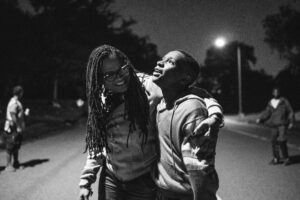
Ava DuVernay: The form really was tough in figuring how I wanted to do it. There’s a world where you have an actor playing Donald Trump. There’s a world in which this is a true crime thing and you’re following the cops and they are going through the scene and they are doing it like a mystery. There’s a world where you have a hot young journalist on the case. I looked at all of them and tried to figure it out but what it really came down to was the men, these boys and their voices. So, I decided to take a form where every single scene spoke to their story and let their story guide me. I wasn’t sure what genre this would fit in, but I just had faith that their stories were the most fascinating aspect of the whole thing and if I can stay true to that and not get sidetracked by all the bells and whistles, I’d be ok.
The documentary that came out a few years ago was referenced a lot by some of the folks on this project. How much of that film helped you in structuring this film?
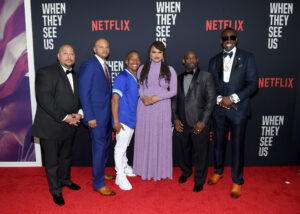
Ava DuVernay: Sarah Burns is the director of The Central Park Five doc. She’s Ken Burns’ daughter. Their story is referenced and they told her their story and they told me their story. Both of these forms take their story and present it in a different way. She was great because I called her and said I want to explore the next steps beyond what they told you. Would you give me your tapes? The raw footage that didn’t get cut so that I don’t have to ask them what you asked them. I can ask them the next question and she did. I’m grateful to her for that. No one has really asked me about that. I used all of her tapes to get all of the details of the case so I was able to asked them questions about more family nuance or emotional pieces because I didn’t have to have the case stuff because of the tapes she had and police transcripts and press coverage. When I sat down with the men, I asked them who they were not just about what happened to them.
The first two parts of the series are disturbing to see how these young men were treated by the cops. Was there a point where you challenged yourself how much to put in or leave out?
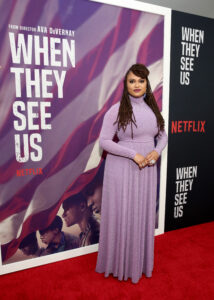
Ava DuVernay: No. That was the great thing about working with Netflix. I was originally going to do it as a film, as a feature film, but when I got in there and heard the stories and saw all the research materials, this is a series. In working with Netflix, at no point, did they ask about the running time. I would say, “Here’s part 1” and they would say, “Oh. Great.” Then I would hand in the rest of the parts. It was a great collaboration. At no point did anyone ever talk to me about the running time. I was able to tell the story in the way I wanted to tell it and in the form I thought was best told. That’s just a luxury we just don’t enjoy elsewhere, especially with material that centers around black people. No one said, “Take all the time you need” but that happened here.
You cast a great deal of fresh faces here. What were you looking for as you put together this series?
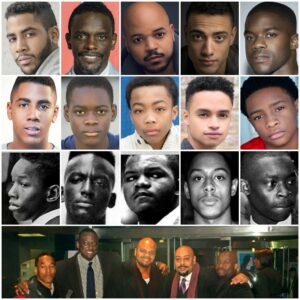
Ava DuVernay: I’m looking for people that fit well into my blackfilm.com grids. When you put them altogether, that made me happy. Seriously, there are 117 speaking parts and 179 total parts. For the five men especially, I was looking for boys who can embody the spirit of the men. I wasn’t that concerned if they looked like them. Just like Selma, David (Oyelowo) doesn’t look like (Martin Luther) King but he embodied the spirit of King to me. I was looking for boys that felt like Kevin, Yusef, Raymond, Antron and Korey to me. I got to know the guys really well so I needed to match up that thing that’s intangible with them.
Did you have all of the actors who played the five men meet with them to get an idea of who they are?
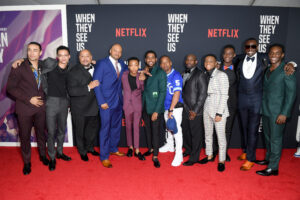
Ava DuVernay: Yes. They did more than meet with them. They spent a lot of time with them beyond the set, not only to observe but get a sense of their essence. But also to know them and to know what the stakes were. You’re responsible for telling this real man’s story who went through hell. They all took it seriously and rose to the occasion.
Can you talk about the team behind the scenes, from Bradford Young to Terilyn Shropshire to many more who, for some, are working on their first television project?
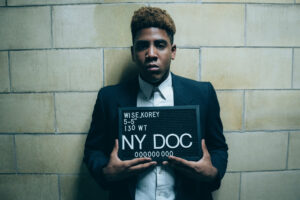
Ava DuVernay: The first person who comes to mind is Akin Mckenzie, who is a production designer. Young brother and killed it. He transformed the city and made it into 1989. The homes, the apartments, and much more. Those were built sets on a stage. He made those feel like real black domestic spaces. Our homes. All the way up to the precinct and how it felt to walk through there. This is his first televised cinema, the series format. It was Bradford’s first. Terilyn had done Gina Prince-Bythewood’s Shots Fired. Kris Bowers, who worked on the music, had been working on Dear White People with Justin Simien and he had just came off working on Green Book. This was a little different. For people who had worked on the series, we shot this and made it like a film, a very long film.
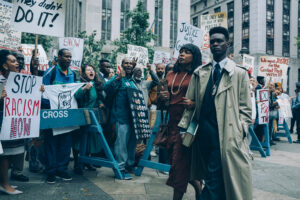
Although it was a series, we worked from a film style composition. Not as much time you would have for a film but not as little time you would have for a normal series. You had this weird middle space. For Terilyn, she was the first up and it was challenging finding the tone because all of the other editors were going to follow her lead. Episode 1 was a masterclass in finding tonality. We had a black visual effects supervisor and to be out in the field with him in New York and just understanding how we were going to change buildings, and age people back and do all the tricks that most people don’t see. It was a really gorgeous team of black craftspeople and artists who came together around it. I can’t forget Aisha Coley. She cast 179 parts in it with 117 speaking parts. With Wrinkle In Time, we had way less than that. We had a lot of people working on a high level.

How did you go about in capturing the side of law enforcement and what they did to these young men?
Ava DuVernay: We did our research. We invited all of them to talk to me so I could hear their experience, just like I did with the men. Very few took me up on it. Some did off the record, so that their colleagues wouldn’t know that they spoke. No one ever admitted any guilt. In their eyes, they didn’t do anything wrong. That plus the court research and files that we were slipped, and material that we got a hold of that we weren’t supposed to have, all the press coverage and all of the interviews gave us a robust picture of that time. From there we went about in constructing the story of the men.
Trailer 2
The Criminal System of Injustice Featurette


Loading…