
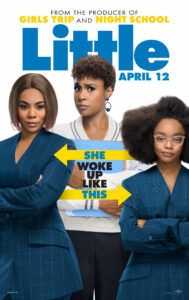
Hitting theaters this week from Universal Pictures is producer Will Packer’s upcoming comedy Little, directed by Tina Gordon and starring Black-ish star Marsai Martin, Issa Rae and Regina Hall. The movie is based on a pitch by Martin.
Regina Hall and Marsai Martin both star as Jordan Sanders — Hall as the take-no-prisoners tech mogul adult version of Jordan and Martin as the 13-year-old version of her who wakes up in her adult self’s penthouse just before a do-or-die .
Insecure’s Issa Rae plays Jordan’s long-suffering assistant April, the only one in on the secret that her daily tormentor is now trapped in an awkward tween body just as everything is on the line. Little is an irreverent new comedy about the price of success, the power of sisterhood and having a second chance to grow up — and glow up — right.
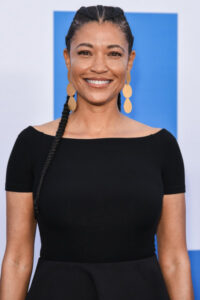
For Gordon, it’s her first film back on the big screen since she made her directorial debut in 2013 with Peeples starring Kerry Washington. Prior to that, she worked as a screenwriter, notably on films such as Drumline and ATL. More recently, she wrote the screenplay for What Men Want, which starred Taraji P. Henson. Blackfilm.com’s Nicole Granston caught up with Gordon as she spoke about coming on as a writer initially and then directing the film.
Nicole Granston: You’ve worked with Will Packer before in ‘What Men Want’. How did you get involved with “Little”?

Tina Gordon: I first came on as a writer, working on the script, as it got ready for production. At that point he had not asked me to direct it. I really thought I was just working on the script as I had done for ‘What Men Want’. Then one day out of the blue, Will called and said let’s meet for lunch. I met with him and his partner James Lopez and they asked me to direct the movie. At first I was a little nervous because he’s definitely on a winning streak and I didn’t want to break that, but I practice what I preach, win or lose, you have to move forward. So I signed on.
NG: In the film, there are a few shots showing life size magazine covers for INC, WIRED, and Fast Company with Jordan Sanders prominently being featured. The spirit and feel of the movie is one of girl power, magic and empowerment. What message were you trying to send to young girls?

TG: It started with Marsai Martin. The fact that a 10-year-old could walk into Will Packer’s office with an idea and a goal and then into the offices at Universal Studios to pitch the idea and act out scenes, that took so much courage. Off-handedly I would say, that was magic in and of itself, not even thinking about the fact that we were doing a movie about magic, and then ultimately #blackgirlmagic. Everybody, the producers, Issa, Regina, everybody lent their creativity and experiences to push Marsai into this moment that she dreamed for herself. I feel like the message of the movie amplifies what we were doing for Marsai. So, it was my intention to have the world set in tech, where we don’t see much representation for black girls. It’s meant to be a symbol of making space for yourself in the world.

I pictured Jordan Sanders having to fail and win many times, to make that space for herself in tech as an entrepreneur. The art on the walls, the clothes the actors are wearing, there are so many black female crafts women doing the things you see in the movie. I wanted to support that idea.
NG: A lot of people may not know or remember that you began your career as an intern in the writing department of a family comedy, The Cosby Show. In co-writing the screenplay and directing this movie, did you pull from any lessons you learned in those early days?
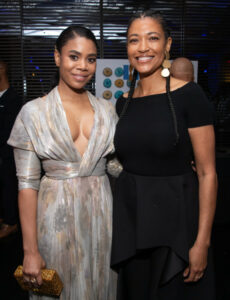
TG: The biggest element that I took away, that I still use today, is you can show the culture on the walls, in what the actors are wearing and in the references they are making about art and music. If I go to collaborate with the production designer, I’m definitely talking about what artist can we put on the wall, who is she, what is her message; let’s show the culture authentically in the little areas that we can and it combines, I hope, in a presentation that black people can feel good about. That is something I definitely took away from my days as an intern.
NG: When we first meet Jordan Sanders, she’s a 13-year-old girl whose science experiment doesn’t go according to plan and she is being mocked, teased and bullied. With the advent of social media it has given rise to more pressure. What advice would you give yourself at that age?

TG: When I was young, the idea of appearing perfect was on a small scale. I took failing at anything very personally and I thought it would be a streak that would continue for the rest of my life. I don’t know how kids today overcome the natural process of winning and losing, failing and succeeding because what’s presented to them on social media is so perfect all the time. So I would tell myself that losing is a part of the process. Don’t take it as a condemnation. You’ll win and feel great about yourself; you’ll lose and feel not so great about yourself. It’s all a part of the journey, but do not stop pursuing your goals and listening to that voice telling you to go forward.
NG: As you move forward, what’s next for you?
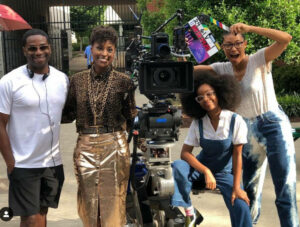
TG: I was doing a lot of writing before “Little”, just finding my comedic voice and what I wanted to do next. When Will Packer, and his partner James Lopez, called it ended up being a great fusion. I’ll be continuing to do some more work with them in the near future.
Clip – Jordan Demands New Ideas from Her Team



Loading…