
Exclusive: Disney’s first Black animator Floyd Norman talks The Jungle BookBy Wilson Morales
February 10, 2014
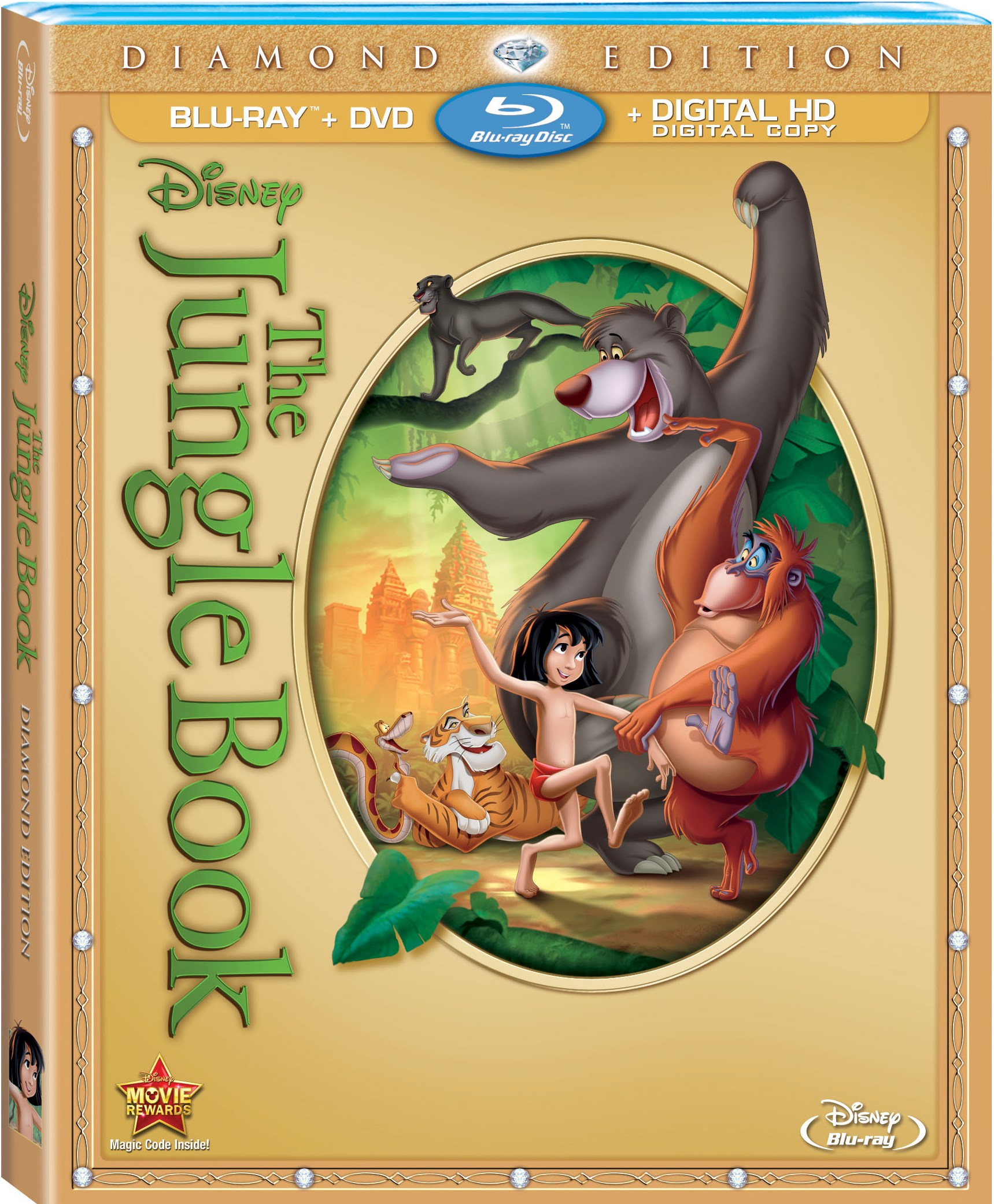 Coming out this week is the Blu-ray Diamond Edition of one of Disney’s animated classic “The Jungle Book.”
Meet the most unforgettable characters and embark on a thrilling adventure with Mowgli as he journeys deep into the jungle and learns “The Bare Necessities” of life from happy-go-lucky Baloo the bear. Meet Bagheera, the wise old panther, and crazy King Louie, the orangutan. But watch out for the cunning tiger Shere Khan and Kaa, the ssssneakiest snake in the jungle!
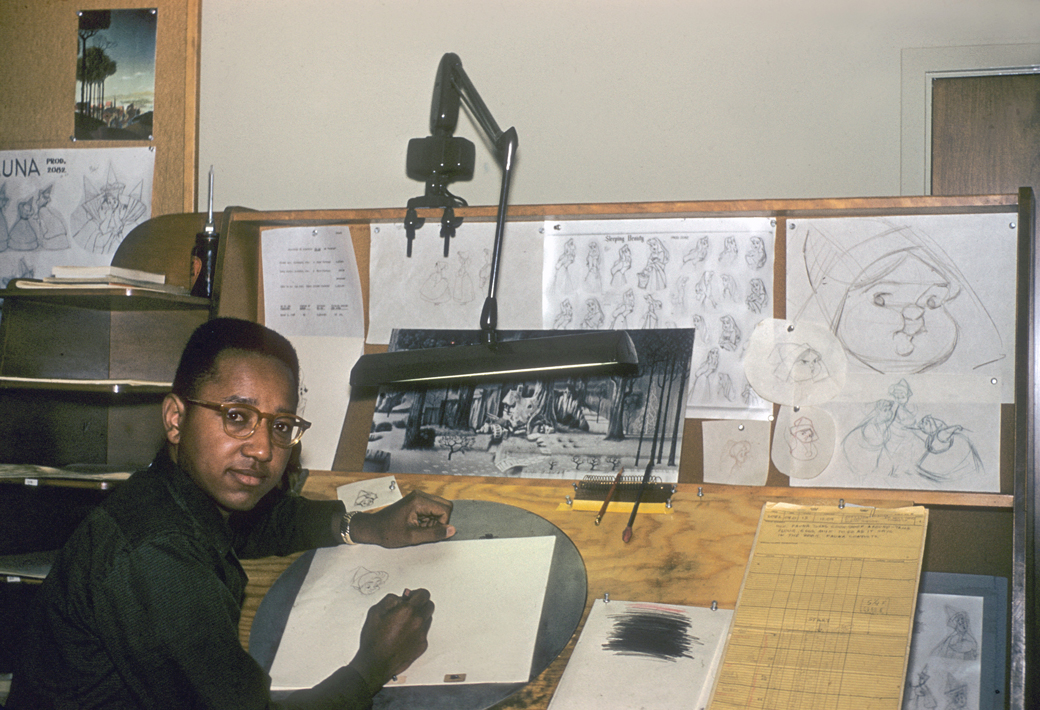
What’s special about this film is that part of the animation team included Floyd Norman, who is credited as the first African American animator hired at Disney.
While his first feature film project was for Disney’s “Sleeping Beauty,” followed by “The Sword in the Stone” and “Mary Poppins,” it was ‘Jungle Book’ where he was instrumental in creating the storyboards for the characters that Rudyard Kipling created in the book.
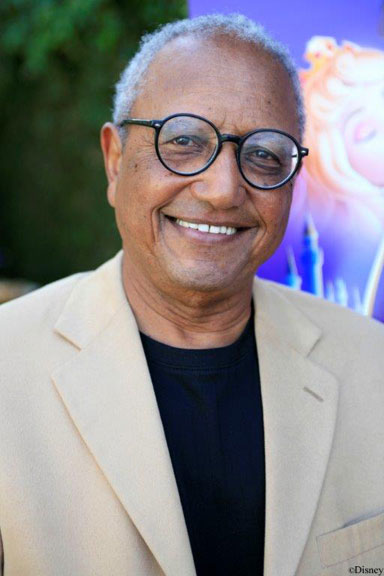 For nearly 50 years and at the age of 83, Norman is still working hard, serving as a consultant at Pixar and Disney Animation.
In speaking with Blackfilm.com, Norman talks about his experience working on ‘The Jungle Book,’ working with Walt Disney, and his views on the animation world today.
How does it feel to be recognized as the first African American animator to work for Disney?
Floyd Norman: It’s something that’s been handed to me. It’s not something that I particularly wanted or sought. I came to Disney as just another struggling young artist who was trying to get into the cartoon business, but I never thought of myself as the first of anything. I supposed it’s a compliment that I will accept graciously.
 You had been working for Disney already before ‘Jungle Book,’ but how difficult was it back then to get a job at Disney?
FN: Back in the 1950s, the animation business was considered a rather odd and quirky business. Most people didn’t know the job existed. There were only a rather handful of individuals like us who applied for a job at Disney. Most people weren’t aware that one could make a living being an animator. Being a cartoon fan since I was a little kid, I knew about the studios like Warner Bros. and Disney and I knew that this is wanted to do with my life. However, there was no real path to get into a Hollywood studio. You had to make or find your own way because even schools didn’t teach animation or offer any advice to young students on how to get into animation. You had to make your own way.
 When you on ‘The Jungle Book,’ what position were you on the team? Were you heading the team, part of the team, or did everything fall into your lap?
FN: It fell onto my lap because the whole job fell into my lap. Bill Peet had already been working on ‘The Jungle Book’ throughout 1965. He was chosen by Walt Disney to adapt the Kipling novel. Bill had been adapting the story, writing the screenplay, and doing the storyboards by himself because that the way he prepared his work. As you know, Bill and Walt had a falling out and Bill walked off the movie. Then Walt had to put together a new story crew and I was part of the new crew to revamp the story.
 Did everyone work on separate parts of the film and then come together as a team in the end?
FN: Story-boarding and story developing on an animated feature is always collaborative. There were about a half dozen of us working on the film. We worked on teams of two, with one team starting at the beginning, another in the middle, and then one at the end. We’re all working separately, but still as a team. We tried to work together as best as we could. We had to do it this way because we had a limited time to turn the film around. We had a release date coming up in 1967, and we had to get the story together by 1966 and get it into production. We had to move quickly and it all worked out in the end.
 How was your relationship with Walt Disney at the time? Was he hands-on or did he let the team work without any supervision?
FN: The Walt Disney Studio under Walt Disney was always hands-on when Walt was there. Nothing got past Walt without his approval. That meant that everything we did, from the sequence we boarded and everything in the movie had to be approved by Walt Disney. Every character, every sequence, and every song had to be approved. Walt as an older gentleman was not quite like the energetic animated young guy who used to pitch stories like performing the characters and hopping around on the sofa and being active and engaged. He was an older gentleman at the time I began working with him. He was around 64 or 65. He would look at what we had to show him and give us thumbs-up or thumbs-down. That was pretty much Walt’s involvement with the film. He didn’t tell us what to do but he did tell us what he liked and what he didn’t like.
 As you worked on the project, what was the challenging aspect as you created these characters?
FN: Lucky for us, the characters were created by Rudyard Kipling so that part of the job was done. Plus, Bill Peet had already done the animation and character designs back in 1965, so that was already done. We didn’t have to work about character development that much. All we had to do was take these characters and put them in situations that entertained. That was our goal, to take these characters and have fun with them. Walt emphasized that word “fun”. He wanted it to be light, fun-filled and just a romp from start to finish. That was the tone of the film. Our job as storytellers was to avoid darkness and just the whole film light and fast and fun until the very end.
 Having worked on the film at a young age and looking back as the film has come out on VHS, DVD, and now Blu-ray, if there was anything you could change, would you?
FN: Yeah, we always look at the work and wonder if we could have done anything differently. For the most part, when I finish a job, I try to leave it behind. I try not to go back and revisit it and want to do it all over again. I rather move forward. I think this was Walt Disney’s philosophy as well. That’s why he didn’t care for sequels. He didn’t care for doing things over and over again. He was always ready to do something new. I try to feel that way about the work I’ve done on various films. I could back and second guess but I realize that I had done what I had done and the job is completed. Now, it’s time to move on. I tend not look at my work that was done a few months ago or years ago.
 What makes ‘The Jungle Book’ a classic?
FN: There are many Disney classics, and each one has its own particular tone and people are huge fans of Pinocchio and Snow White, but ‘Jungle Book’ is unique in the sense that it’s a much lighter film than the earlier Disney films. Those tended to have more drama, more sadness, and more pathos. ‘The Jungle Book’ is pretty much a romp. It’s a fun story from start to finish. We were not trying to be serious about our storytelling at all. We just wanted the film to be light and entertaining. I think that’s what makes ‘The Jungle Book’ unique. ‘Pinocchio’ is a film that would be on my list of favorites because it also features great storytelling, great artwork and great music. ‘Jungle Book’ is little more of a lightweight film. I wouldn’t put it in the same class as Bambi or Pinocchio, yet as it stands on its own, it is a remarkably entertaining film that audiences resonate with.
 You have had a long career since then and you continue to work. What keeps the fire burning?
FN: I can’t stop working because if I did, I would die. The thing about being a creative person is that you want to create. I can’t imagine myself out on the golf course or traveling the world. For me, the greatest joy I’ve received in life has been staying busy or working on a project and facing a new challenge. That’s why Walt Disney was always working. People have told me that Walt Disney was still planning Walt Disney World while on his deathbed. The man simply never stopped working and I think I have the same philosophy. What keeps you alive is doing what you love and I’ve tried to do that throughout my life.
What do you think about the animation films today?

FN: What’s amazing to me is the number of animated films. Animation has gone from being this strange little film category to now a major film category. It’s making a lot of money and more than its live action counterparts. We’ve garnered new respect because people are taking it more serious than before. Look at the money that ‘Frozen’ has made and the way that it has been embraced by many.
Do we have more African Americans working in the animation department?
FN: I can affirmative to that. When I came into the business back in 1956, I could literally name every African American artist in the business. Today, there are so many, I can’t begin to name or know them. Things have changed in a very big way.
Trailer
ShareTweet



Loading…