
Exclusive: Editor Terilyn Shropshire Talks ‘Beyond The Lights’Posted by Wilson Morales
November 13, 2014

Coming out this week is the Gina Prince-Bythewood‘s romantic drama Beyond The Lights, starring Gugu Mbatha Raw, Nate Parker, Minnie Driver, Colson “MGK” Baker, Danny Glover, Aisha Hinds, Aml Ameen, Tyler Christopher, and India Jean-Jacques.
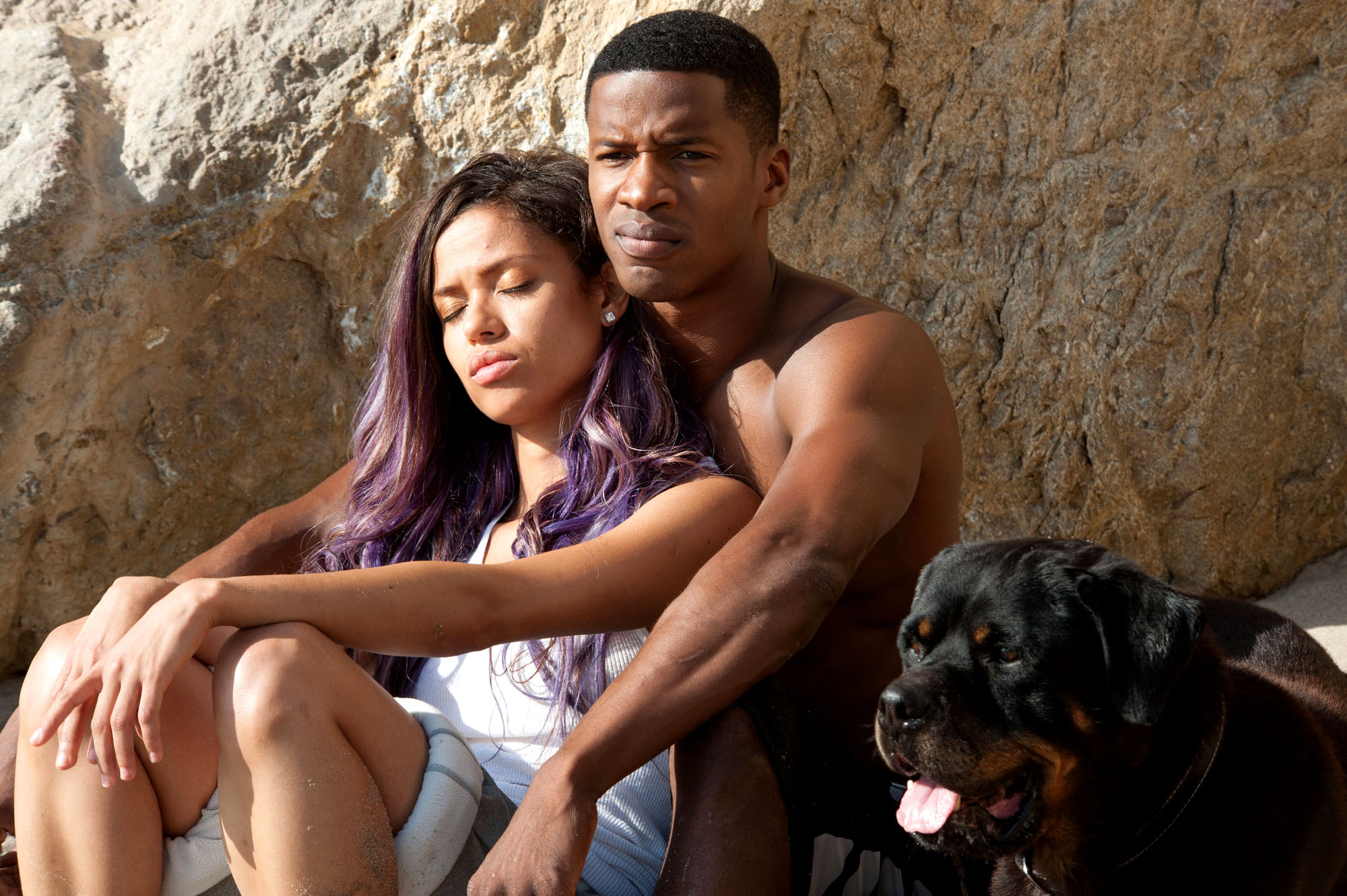
Beyond The Lights is the story of Noni Jean, a hot new artist who has just won a Grammy and is primed for stardom. But the pressures of success compel her to nearly end her life until she is saved by a young police officer named Kaz. They fall hard for each other, despite the protests of their parents who want each to focus on their own career ambitions. As far as Kaz’s father (Danny Glover) is concerned, his law-and-order work is only the first step towards a future career in politics. Kaz knows what it’s like to be groomed for greatness, and he has a way of looking right through Noni’s camera-ready facade that throws her off her game. But he might be the missing piece to unlock her artistic potential.
What’s interesting is that Prince-Bythewood isn’t the only woman behind the production, but in fact there are several women, including producer Stephanie Allain, cinematographer Tami Reiker, editor Terilyn A. Shrophire, and costume designer Sandra Hernandez among others.
 For Shropshire, it’s her third collaboration with Prince-Bythewood, having worked on Love & Basketball and The Secret Life of Bees. While there’s been a long list of female film editors from Anne Bauchens, Verna Fields, Dede Allen, Alisa Lepselter, Thelma Schoonmaker, Alisa Lepselter, and Mary Jo Markey and Maryann Brandon, where each has had a long-lasting relationship with one director, Shropshire has also had the pleasure of collaborating other filmmakers (Kasi Lemmons , Vondie Curtis-Hall, Darren Grant Salim and Mara Brock Akil, and Gina’s husband Reggie Rock Bythewood).
Her work has resulted in 12 major features from Eve’s Bayou, The Caveman’s Valentine, Love & Basketball, Waist Deep, Diary of a Mad Black Woman, Biker Boyz, Talk To Me, American Violet, Jumping The Broom, Sparkle, and last year’s Black Nativity.
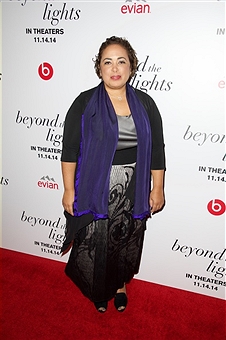 Her editing on Vondie Curtis Hall’s Redemption: The Stan Tookie Williams Story earned Ms. Shropshire an American Cinema Editors (A.C.E.) Eddie Award for Best-Edited Motion Picture for Commercial Television.
Suffice to say, she’s the most sought after among Black film editors, which puts her atop in the field
Blackfilm.com recently spoke with this extraordinary talent about working with Prince-Bythewood, her relationships with other filmmakers, and why there aren’t many African Americans in her field, specifically women.
Having worked with Gina on three of her films, how would you describe your relationship?
 Terilyn Shropshire: I think we’ve developed a really good working relationship. The thing about a relationship between an editor and a director is that they are coming from an environment where they are being asked an infinite amount of questions per day on the set. It’s almost like a writer, where they start from a solitary place, and then when get to the editing room, they are coming back to a solitary place to rewrite another version of what we had been working on. It can at times be frustrating. Working in an editing room brings a range of emotions. You really have to trust the person who you are going through this process with and ultimately, the fact that we have worked together three times now, we have established a shorthand and we know each other so well. When you spend that many hours in a space, life comes in too. On any given day when we are working on a film, something might happen in one of our lives and we’ll talk about it. So, it’s really a development of trust.
If you were working with a first time director, would you have more control in the editing room because of your experience or is it 50/50?

TS: For me, it’s never about having a say. It’s always a collaborative thing. I always tell young and up-and-coming filmmakers, especially editors, that you can take pride in your work but you can never call it your work because it really isn’t yours. You’re there to facilitate the vision of the director. You’re there to find the best of the material of the film. Often, when the director is out there shooting, you’re building a cut for them to come in and review. In the early stages, a lot of it is what you’re seeing and your impressions of the dailies that are coming in. When you present that to the director, you’re saying, “This is the movie, that I’m seeing, in which the foundation will build from.” Once they come in the room, it really is collaborative. It isn’t about a say but at the end of the day, it says “directed by Gina Prince-Bythewood.” By the time we get to the end of the process, there might be small things that we have different opinions about, but I tell the director that they have many voices coming at you and at the end of the day, those voices will go away and onto other films. You will have to look at yourself and say that “I directed this film and I stand by what I did.”
With the film shooting between London and Los Angeles, were you cutting during or after production?
TS: I always cut during. In fact, I come in officially the day they start shooting, but often with the directors that I have established relationships with, I’m involved even prior to that. With Gina, once she’s ready to open up her script up to some feedback, I’m one of the first people now that have access to that. I’m grateful that I have earned that trust in her. I often start the physical editing the next day after they have shot for the first day. That’s important because if they are moving quickly and they to wrap up from a location, they need to know if they got the scene and if there’s anything that’s missing. Sometimes I’ll look at dailies and I’ll notice something. I’ll find Gina on set and tell her my feedback of what I saw to get her thoughts. I try to stay up with the cameras as much as I can so I can help them during production.
 Depending on the budget, how long is the process?
TS: Well, often it does have to do with the budget, but on the projects that I have done lately, their production schedule has been anywhere from four to six weeks of principal photography during which I’m cutting. I’d like to have 10-12 days before they come in and see the first cut and if it is a DGA film, the director traditionally has at least 10 weeks to deliver their cut to the studios. Within that 10 weeks, we are editing and also having friends and family screenings and a couple of people to look at the cut that we developed. Then we bring in the producers to get their feedback. That 10 weeks isn’t just us putting together the cut for the studios. Often, the studios would do their own test screenings. Once the 10 weeks go by and we deliver it to the studios, depending on the feedback, the process could go on depending on the audience previews. The average is about nine months.

At what point does anyone decide on a “director’s cut”?
TS: That’s an interesting question. A film being edited is truly a living, breathing, evolving thing. As we get closer to the end, you have more voices that come in and often temper what’s going on, but I can say that every film is different. Sometimes you have a relationship with the studio where they see something and they love it and there’s minimal changes from the director’s cut and sometimes you will be with a studio that takes you to an audience preview and they don’t get the numbers that they think they want and they want to cut and adjust the film to try to get better numbers. Every film is different but I would say creatively the studio was very happy with what Gina delivered to them and the audience confirmed that when we took it to be previewed. Our changes were very minimal. There were a couple of notes that Gina agreed with, and the things that she didn’t necessarily agreed with, they were okay with. Creatively, they were a great studio to work with. The people that go see ‘Beyond The Lights’ will see the film that Gina wanted them to see.

Within the film, you have both a sex scene as well as a music scene. Did any of those present a challenge to edit?
TS: It’s interesting. I always say that everything that I do prepares me for what’s next. As far as music, I had done ‘Black Nativity’ which is a musical just prior to ‘Beyond The Lights.’ and prior to ‘Black Nativity,’ I had come off from finishing ‘Sparkle.’ I had been in a music frame of mind going into ‘Beyond The Lights’ and often music is so much part of the films that I work with and I get really involved in it. So that part is not difficult. And with the sex scenes, to me, it’s not the physical part of the sex scene that’s difficult. You’re really trying to illicit a certain emotion no matter what the scene is doing. Through other films, I have worked on certain scenes where you’re trying to show the audience a certain aspect about these particular characters. I think the goal is to be respectful to the attention of the film and hopefully never be in a situation where you’re not protecting your characters or the actors. Fortunately, I work with filmmakers who have an aesthetic in telling a story in a beautiful way and not in an exploitative way.

Between Reggie and Gina Prince-Bythewood, Kasi Lemmons and Vondie Curtis-Hall, and Salim and Mara Brock Akil, that’s 12 films and 3 married couples. How does it feel to be their go-to editor?
TS: Each director is different, even married ones and they each have their own aesthetic. To me, it’s very much a doctor-patient relationship. Obviously, the partner gets to see the process that we go through and I think that they see the trust that is built in our collaboration. I am incredibly honored that these filmmakers trust my talent and know that I will bring the best out of their films. I’ve been very fortunate to have these couples come back to me and want to work with me again. I enjoy watching how they have grown as filmmakers. We work together and after it’s over, we go on and experience our lives. They’re honing their craft and when they come back they’re different people. They’ve matured, things in their lives has changed them and they come back and bring that part of themselves into a new project. It’s a wonderful process. I really love what I do.

Why is there a lack of women of color behind the camera, particularly in your field?
TS: I think part of it is that with the advent of digital media I was fortunate enough to grow up at a time when there was film in the editing room. With film, there were bodies that were needed to handle and organize the film and when I was coming up as an apprentice editor, there were often 2 or 3 assistants on a show. You had that ability to come up in a class by studying under other people. You had your master editor, and first assistant editor, second assistant editor, and as you continued to get better at what you did, you moved up. What’s hard now in the digital media is there is a situation where there’s no film in the cutting room and there’s less need and especially from a financial standpoint from a studio or producers, there’s less bodies in the editing room. I literally went from having a few film assistants, and lab assistant and a PA like when I worked on films like ‘Caveman’s Valentine’ to being in a situation where it’s myself, one assistant and a PA on ‘Beyond The Lights.’ In some ways, there less abilities to bring people in and train in a way for them to move up. I think that’s part of the issue. I also think there’s not necessarily exposure to the craft that are behind the scenes. Everyone, when they start coming up and studying film, they want to be a director or writer-director and I think there’s a lack of ability to really show people who are interested in being in the entertainment field from sound mixers, production designers, or costume designers; the ability to show that there’s more than being a director and these contributions from other fields are important. If those options could be more exposed, then you would see more people doing what I do.

What’s a good reason to see Beyond The Lights?
TS: Who doesn’t love a good love story? I love love stories and most people look for something that uplifts them. It’s really about empowerment, male and female and being able to be true to who you want to be in life. All of these are good messages to go to the movies for but at the end of the day, you will be entertained.
Beyond The Lights hits theaters on November 14.