
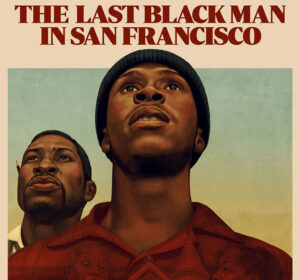
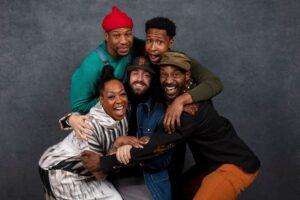
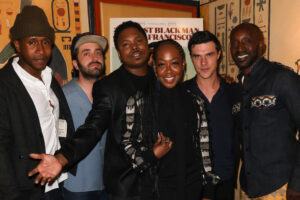
Hitting theaters this week from A24 is The Last Black Man in San Francisco, winner of the Best Director and a Special Jury Award for Creative Collaboration at this years’s Sundance Film Festival.
The film stars Jimmie Fails, Jonathan Majors, Rob Morgan, Tichina Arnold, Danny Glover, Mike Epps, Finn Wittrock and Thora Birch
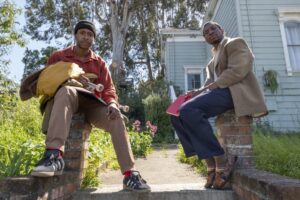
The Last Black Man in San Francisco is a sweeping story about friendship and holding on to your roots in a rapidly changing world. The story focuses on Fails’ desire to retain his family home, which was built by his grandfather, against the backdrop of a rapidly-gentrifying San Francisco. Fails and his oddball best friend Prentice, who both live in the city’s last black neighborhood, go on a search for a sense of belonging in a changing city that seems to no longer understand them.
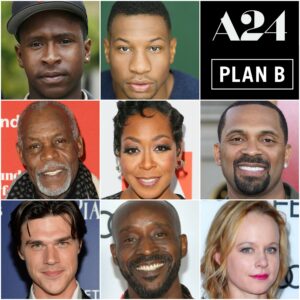
The film takes a poignant and sometimes satirical look at the ramifications of gentrification in San Francisco. Jimmie Fails collaborated on the project with his best friend director Joe Talbot.
We spoke to Arnold, who plays Jimmie Fails’ aunt Wanda, about the film, rumors of a Martin re-boot, Tiffany Haddish and the reality of being a Black actress in Hollywood.
Can you talk about your role? You play Jimmie’s aunt in the film. Can you discuss your role and more about your character?
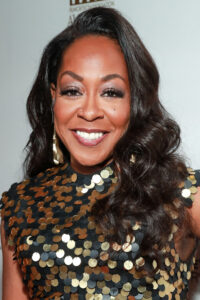
Tichina Arnold: The project came through my agency. I read the role and I just loved the scene. Then when the script, it was the first script that I read where I was like, good lord I couldn’t imagine it. You know how your imagination is bigger than anything? And I could not imagine the film. I was like how are they going to shoot it? I didn’t know what a witch hat was… There were certain things that I just wasn’t aware of. It wasn’t until I got the role and I saw how Joe was shooting it. I was like wow; this movie is going to be incredible. The film was just different. Very rarely as a Black woman in Hollywood do I get opportunities and roles that work. That are specifically written for a Black woman. I was really taken by the scene and taken by the script and wanted to be a part of it. I just knew that this movie would be different. It was really different than anything I have read before.
I spoke with Jimmie and Joe. They said that you auditioned for the role. What was that process like?

Tichina Arnold: To audition for a role. You come in you read for the casting agent. After you read for the casting agent I had to wait for Joe to come back into town. I read with Joe and Jimmie. I guess that is when I secured the role. Reading with Joe and Jimmie. Reading with them gave me an opportunity to hear more of their backstory. Why they wrote the movie. I definitely wanted to be a part of this project. After seeing the labor of love that was involved in it as well.
How you were describing this role as the opportunity it presented to you as a Black woman to portray this type of role. That came across on the screen, because there was realism to your depiction of the character and your report with Jimmie that was able to come through. Was there any type of advice that Jimmie told you about his own family? And how to portray the role?
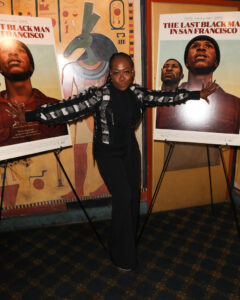
Tichina Arnold: Actually no. Jimmie didn’t give me any back stories on anybody in particular. He gave me just how him and Joe telling me the dynamics of their relationship. And what they came through together. I kind of just took the information from that and pieced Wanda together. I just did it that way. When you do films that are loosely depicted on someone’s life. It’s hard to be able to do somebody else. I’ve never met Wanda. With any roles that I take I like to digest it. Digest the people around me. And the characters around me. And try to make it come to life. So Wanda I made come to life after speaking to Jimmie and Joe. I kinda created her from there. It was bounced off what Jimmie was feeling during the scene as well.
There are some other actors that round out the cast that you have scenes with. Mike Epps has a comedic background. But then he also is a member of the ensemble cast as well as Danny Glover. What was it like for you to work with Mike and have those types of interactions with him as well?
Tichina Arnold: Mike and I never had a scene together other than during the play. Mike is from Survivor’s Remorse. So Mike and I work together in the past. The camera loves Mike Epps. I think Mike Epps is a brilliant actor because everything he does comes from a real place. The camera loves him. Out of all the people in Hollywood. That camera loves Mike Epps. Very rarely does an actor be able to have that kind of connection with the camera. I think Mike Epps is one of those people that the film comes to life every time he is on the screen. To be able to work around Danny Glover. We love Danny, but I didn’t have a scene with Danny. Actually Rob and I had a scene together that was cut. But Rob Morgan is brilliant in this film. You had a lot of people in this film that just came and really did their thing when it came to these characters. And brought these characters to life. And really attributed to this movie being such a great film.
The scene you had with Rob that was cut. Was that outside of him attending the play?
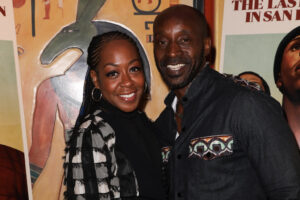
Tichina Arnold : No, it was actually the day of the play when we all walk in. How Rob walks in I had a scene where I would walk in and I would say I would see Rob. We had a small exchange. But other than that overall just working and being around everybody at some point was really good. The play brought everybody together. With films things get cut and scenes that I had with Jimmie were actually longer as well. That was cut. Things have to make sense as well. I think what is different about this movie is that there is no love interest. The love interest is the house. It is kind of like I am one of the dominant females in the film that Jimmie has a love for. She is his touch of reality. His connection to his past but within good memories. Not within bad memories. Wanda was a very poignant part of the film. I am just happy to have the opportunity to play her.

In the film there are scenes that you have with Jimmie once he is squatting in the family home. He goes to your character to try to get that furniture to refurnish that house. Your character seems to be the touchstone with the realism. To not necessarily be a naysayer but to also to insert that reality in certain places, through your conversations with Jimmie’s character.
Tichina Arnold: Wanda is like that typical Aunt. That Aunt that helped raise you. I have an Aunt Wanda. She was like the father figure in me and my sister’s lives. She was that person outside of my mother who you could just trust with your life. I think Jimmie’s character finds that in Wanda. He loves her. He trusts her and they were raised together. It’s a love love relationship and not a love hate relationship. Like he has with his father. It is not contentious. It is the one relationship in Jimmie’s live that is as close to a mother that he can ever get.
You grew up in New York before you moved out to Hollywood. Were you familiar with some of the themes in the film about San Francisco? Not at all it’s the craziest thing. San Francisco when I first moved to L.A. Twenty something years ago back in ’91. I moved to L.A. and I used to travel to San Francisco every Christmas because I was homesick about New York. Because San Francisco was actually the closest thing I could get to feeling like I was in New York. San Francisco is a melting pot. I learned so much about San Francisco, while we were doing this film. I learned a lot about San Francisco. It’s just full of culture. A lot of culture in San Francisco. I love that it is just like a melting pot in NY as well. Everybody in San Francisco and Oakland are very proud of where they are from. They wear the city on their sleeve. It’s just a place that they are proud to be so to be a part of a film that is mentioning and tackling the whole gentrification issue. It is so poignant and definitely needed nowadays.
You’ve had a very illustrious career in Hollywood as an actress. There has been a lot of discussion lately about the struggles of actresses of color in Hollywood as well the call for diversity. With your body of work you have worked on Martin. You’ve worked on Everybody Hates Chris. And there has also been talk about a Martin reboot. Do you think that is a possibility? If there is a Martin reboot will you be back with the other cast members?
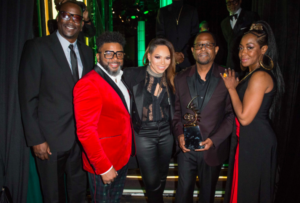
Tichina Arnold: Yes, definitely. All of us cast members have been talking with Martin about doing a reboot. But as you know Tommy is no longer with us so, Martin will never be the same without Tommy. Hopefully our schedules will allow us to all hook up with each other and redo it. But this is what I say, if it doesn’t happen you’ve gotta leave well enough alone. If it does happen hopefully we can have a rebirth. Not a reboot, but a rebirth of Martin. Because it will never be the same without Tommy. We as a cast we all still speak to each other. We’re all good. We don’t know. I don’t know if it will happen. Being a Black female in Hollywood. We are not afforded the same opportunities as White Hollywood. That’s just is what it is. It has been this way forever. Hopefully things will be changing. Things are changing as I speak, but we’ve gotta long way to go.
Do you know if there is going to be a rebirth of the show. Are there any talks about what network that might be at like a Netflix or a Fox?
Tichina Arnold: I have no idea.
Tiffany Haddish. She had recently spoken about some of the feedback she had been getting on auditions in Hollywood. And how she wanted to be better prepared for the auditioning process and roles. Have you gotten any similar types of feedback during auditions or casting sessions that have been something that is not necessarily calling for a more diverse depiction of women of color in Hollywood?
Tichina Arnold: You said that Tiffany Haddish has gotten feedback on her auditions?
Yes, recently she was on a roundtable discussion. And she said she has been going in to auditions and taking her purse with a recorder in it. And going back in and listening to the comments that the casting directors have.

Tichina Arnold: Wow! Good for her. When I’m in auditions I always ask feel free to adjust me. I always ask them. Because I always say if you don’t ask you don’t get. The audition process can go from one extreme to the next. You just never know. You just never ever know. So you’ve gotta go in confident. You’ve gotta go in. It’s like going in for war. You’ve gotta go get that roll. You want it. You go get it. You’ve gotta go prove yourself unfortunately. I think the problem with auditioning this past decade actually, has been you have a lot of people in positions of power that are not creative people. So you have number people. People who are just into numbers and into the ratings. And all that kind of stuff that are paying attention to that stuff. They are not looking at the person, looking at the actor. And saying this is the best person for it. May the best man win unfortunately. What we are up against as actors is people want to see your numbers. I’ve had networks ask me how many followers do I have. It’s crazy. Things have changed. Things have drastically changed from back in the day. People were looking at you for your talent and not for your numbers or followers. This is where we are.
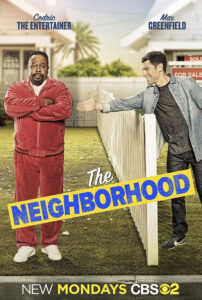
You recently had your series on CBS with Cedric The Entertainer and other cast members. With a show like that did they want when you are going in for auditions, are they trying to find your Q score as well as the amount of social media followers?
Tichina Arnold: All networks deal with Q scores. All of them do. It’s called your Q rating. But, my sister she is my manager. She didn’t tell me which network. I’ve been asked about my followers. Even on auditions and stuff like that I’ve been asked before. I can’t say that CBS asked me for my followers. But it has been asked and this is during the audition process. It’s not just the major networks. It’s also the smaller networks as well. The independent networks as well. It’s about your followers. It’s about how popular you are. And I think that has changed the temperature in the audition process as well. Now we have the reality based programs. You have a lot of choices. People are dealing with a lot of choices. It’s not just three major networks. These three major networks now own other networks. So everything is kind of spread out.
Do you have any other projects coming up that you are working on that are in the pipeline that you would like to discuss?
Tichina Arnold: I did a movie called Clover. The Neighborhood on CBS has gotten picked up for a second season. So we’re really happy about that. I’m just really focused on The Last Black Man in San Francisco right now. Because it is such a wonderful film. That needs to be seen by everybody and anybody that can see it.
Do you think that the impact will be something similar to Sorry To Bother You? It’s something that you see a movie and it has a message that can resonate with you after you leave the theater. How important was it for you to be part of something like that?
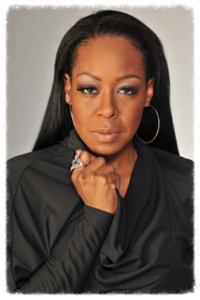
Tichina Arnold: Yes, as an actress. As a Black actress in America I love being a part of anything I can believe in. That is the icing on the cake for an actor. When you are part of a project that you believe in. And I believe in The Last Black Man in San Francisco. Because of the nature of it’s content. How the story was told. The story comes from a real place. And this story needs to be told to as many people as possible because I always say the Black man is everything. There are so many facets to the Black man. It’s so refreshing to see the Black man in a different light. In a light that he should be shown in. Because he is not just one thing. We get a chance to see a Black man’s vulnerability, his fears all of that, without him being seen in the back of a police car. Finally there is a movie that is showing the facets of a Black man in a real way and from a real place.
The Last Black Man in San Francisco is now playing in theaters.



Loading…