
Forest Whitaker Talks Lee Daniels’ The ButlerBy Wilson Morales
August 16, 2013

Coming out on August 16th is Lee Daniels’ The Butler, which tells the story of Cecil Gaines, a White House butler who served eight American presidents over three decades. The film traces the dramatic changes that swept American society during this time, from the civil rights movement to Vietnam and beyond, and how those changes affected this man’s life and family. Academy Award winner Forest Whitaker stars as the butler. The film is loosely based on Eugene Allen’s life.
The film is filled with an all-star cast that includes Oprah Winfrey, Mariah Carey, John Cusack, Jane Fonda, Cuba Gooding, Jr., Terrence Howard, Minka Kelly, Lenny Kravitz, Melissa Leo, James Marsden, David Oyelowo, Alex Pettyfer, Vanessa Redgrave, Alan Rickman, Liev Schreiber, Robin Williams, Colman Domingo, Michael Rainey Jr., David Banner, and Pernell Walker.

For Whitaker, who acted and directed for several years, including winning a Best Actor Academy Award his performance as Ugandan dictator Idi Amin in the 2006 film The Last King of Scotland, this year alone has him working hard in front and behind the camera. Not only is he the lead in this film, but the Texas native also executive produced the critically acclaimed Sundance award winner ‘Fruitvale Station,’ and will also act with Angela Bassett in the musical film ‘Black Nativity,’ where he will sing on camera for the first time. Earlier this year, he co-starred with Arnold Schwarzenegger in ‘The Last Stand,’ and starred with Orlando Bloom in ‘Zulu,’ which was the closing film at the 2013 Cannes Film Festival.
In speaking with Blackfilm.com, Whitaker talks portraying a character that captures the spirit of Eugene Allen, working with Lee Daniels and Oprah Winfrey, and going over the success of ‘Fruitvale’ and the upcoming musical ‘Black Nativity.’
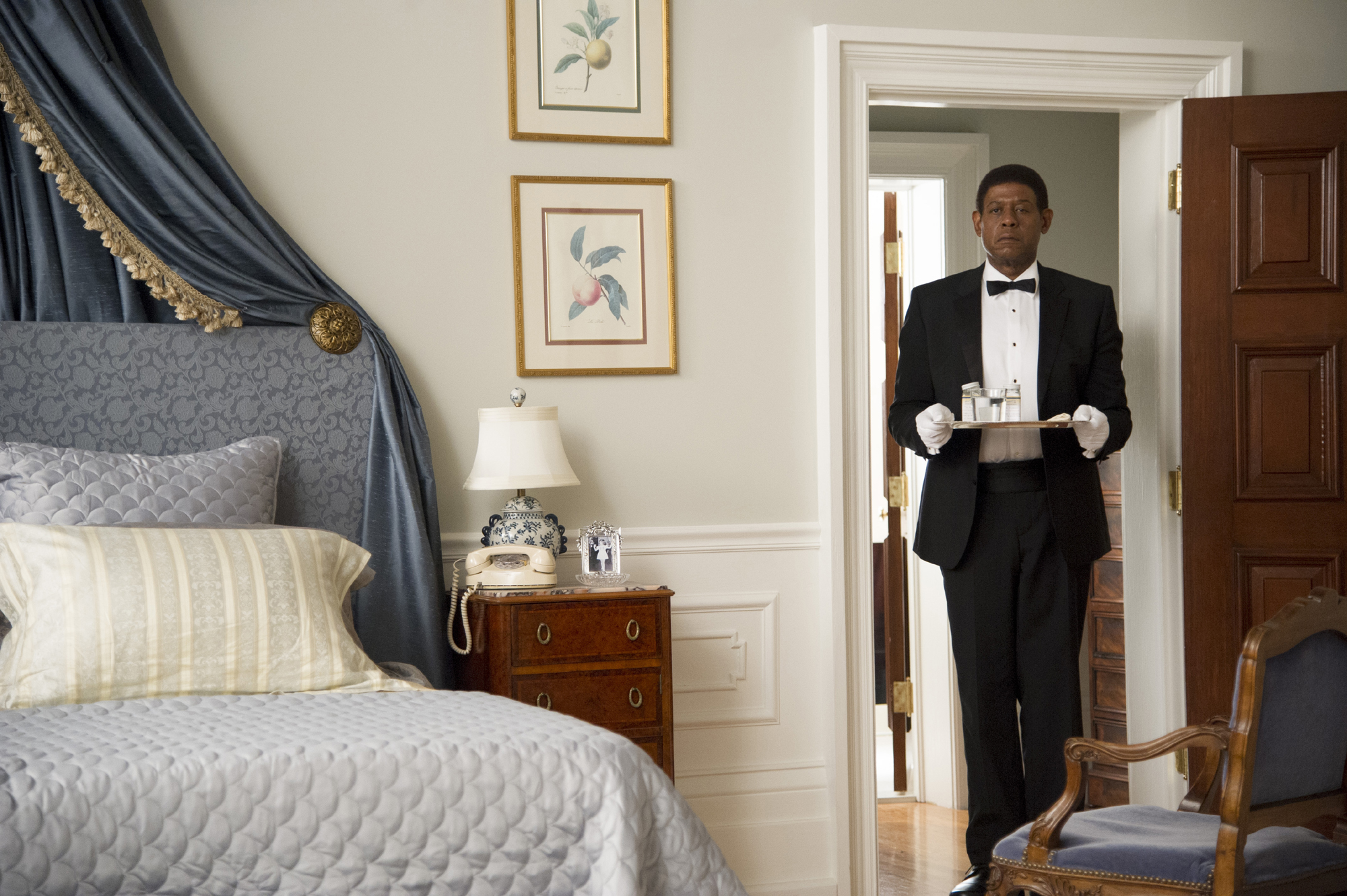 How would you best describe Cecil Gaines and how much research did you do?
Forest Whitaker: I did so much research. Honestly, I did all the research. I looked at all the things of historical value, from when he was born until up to the current president just to understand, because all those events affected him physically and emotionally as they do to us, the events that occur right now. I also studied Eugene Allen and the photographs of him, his movements, listening to his tapes, talking to Wil Haygood about the interviews and stuff. Then I also had to learn…in our movie, this character, Cecil Gaines, is from a different place. So I had to learn an accent from that place, and then I wanted to still gather some of the rhythms of Eugene. So trying to place that, and learning how to be a butler and the history of being a butler because, at first, butlers were slaves. Then they became serfs, and then they became the butlers that we know. Then ultimately, now they’ve become basically managers. Just trying to understand that, and when I say butler, I’m talking about in the 17th century in Europe. Then taking all that information and pushing it so much to a tipping point where I allow the character to speak.
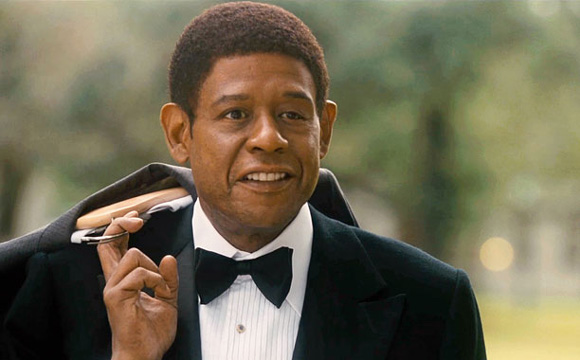
Did you get a chance to talk to his son to get another angle?
Whitaker: I did. I spoke to Charles (Allen). He came to the set actually. So I got a chance to talk to him there, and I got a chance to talk to a number of butlers. Like I say, I worked with a butler coach. I got to talk to of course, in the film, Admiral Rochon, he’s the person and character that brings me out at the end was the advisor for the film. He was there all the time. Admiral Rochon, who was placed in position by George W. Bush, was actually advising us on set. There was just a plethora of people, so many people I talked to, so much research, so many books, and Alonzo Fields who wrote this really amazing book as well. Now the First Head Usher became a female and that was a big deal, just recently, a black female. It’s just a lot of history and understanding to try to grab.
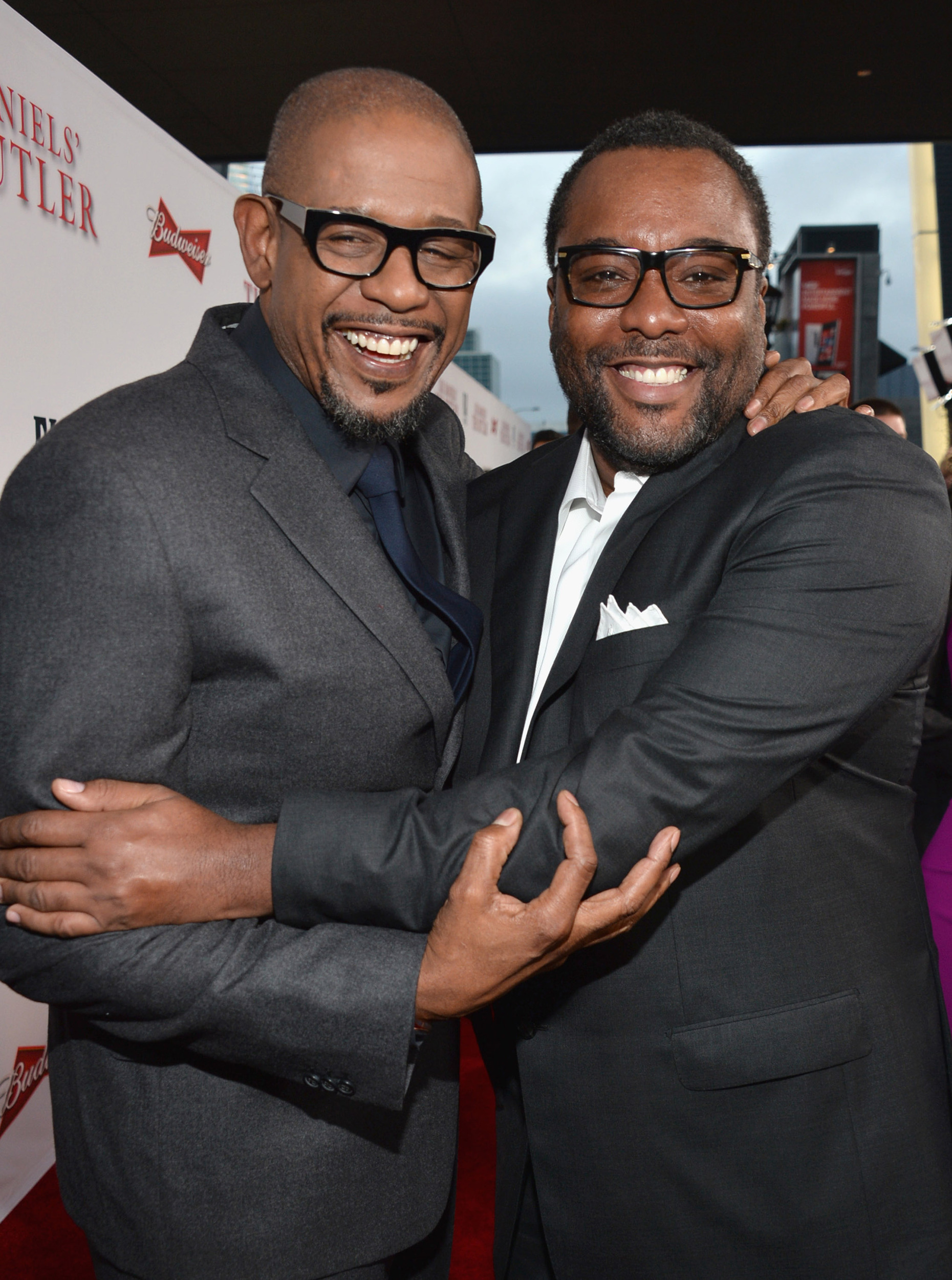 Can you talk about working Lee Daniels, and what you learned from him and what about working with him is different from other directors?
Whitaker: It’s interesting because with Lee, I think he trusts in the simpleness, in simplicity somewhat. By that I mean, Lee at times can be very extravagant, very vocal. He’s very present. You can be doing a scene and you can go to see him and he can be in tears from this, literally weeping from the scene. So he’s very active and present for you. He’s always looking at you, always studying you, all these things. Very often, like he would say, ‘Give me half of that. Give me a quarter of that, an eighth.’ I think that was something to see, to learn for me as an actor and also as a filmmaker what’s being conveyed, what I don’t realize is already being conveyed and what I don’t have to work at, what’s present.
Oprah (Winfrey) is right beside you through most of the journey. Can you talk about working with her, especially with her coming back into the acting field after fifteen years?
 Whitaker: I loved working with her. We had wanted to work together before. We’ve talked about it. At one point we talked about doing a play together.
‘Fences,’ she mentioned it.
Whitaker: Yeah, okay. She had been very kind when she introduced herself to me, really, by inviting me to dinner when I was doing ‘Last King.’ She’d seen the film. It was early on and she just had a nice gathering and so I got to know her from there, slowly. But the thing is working with her on the film, honestly, she was so committed. She helped, like, bring our relationship closer together because she’d be right by my side. We’d be walking, holding hands. She’d rub my back when I was getting ready in the trailer sometimes, and just the trust that was built. There was a trust. The trust between us. I think she said that she trusted me as an artist, that I would living in, like, a space of truth, and so that would allow her to do some of the work. But I think you really have to know, like even the truth of some of the work that she was doing was so, so strong. There were moments where even as the character I was trying to figure out how to react to my wife because they were so honest and so true. It was just like, ‘What do I do with her now?’ She gets in the bed and she’s…I never talk about that one scene. I love it when she’s in the mirror and she says ‘Que sera sera.’

You’re working with so many actors and characters. Can you talk about working with this ensemble cast?
Whitaker: Yeah, it’s an amazing ensemble that Lee got. It was different all the time. That’s what was so great for me as an actor because it meant that I would live in different worlds and a different part of Cecil would come to life, because with the guys, like Cuba [Gooding Jr.] and Lenny [Kravitz]…which Cuba is so funny. He’s hilarious really, and that was a camaraderie with the family, and then the group of us coming together with Terrence [Howard], and you got to sort of see the sort of black bourgeoisie in a way at that time. Then, every time that a president would come, it was like a new president would arrive because they were so different and everything would be quite different. The staff would be different, they’d be different. So it was actually very helpful to me to say, ‘Oh, this week? Oh, Kennedy is coming this week?’ ‘Yeah. ‘OK. Reagan is going to be here?’ So we would do that, and the actors were so strong.
This is a big year for you with ‘Fruitvale.’ You’ve been talked about the whole year. Can you talk about the success of that film and the timing of its release, which coincides with Trayvon Martin ruling?
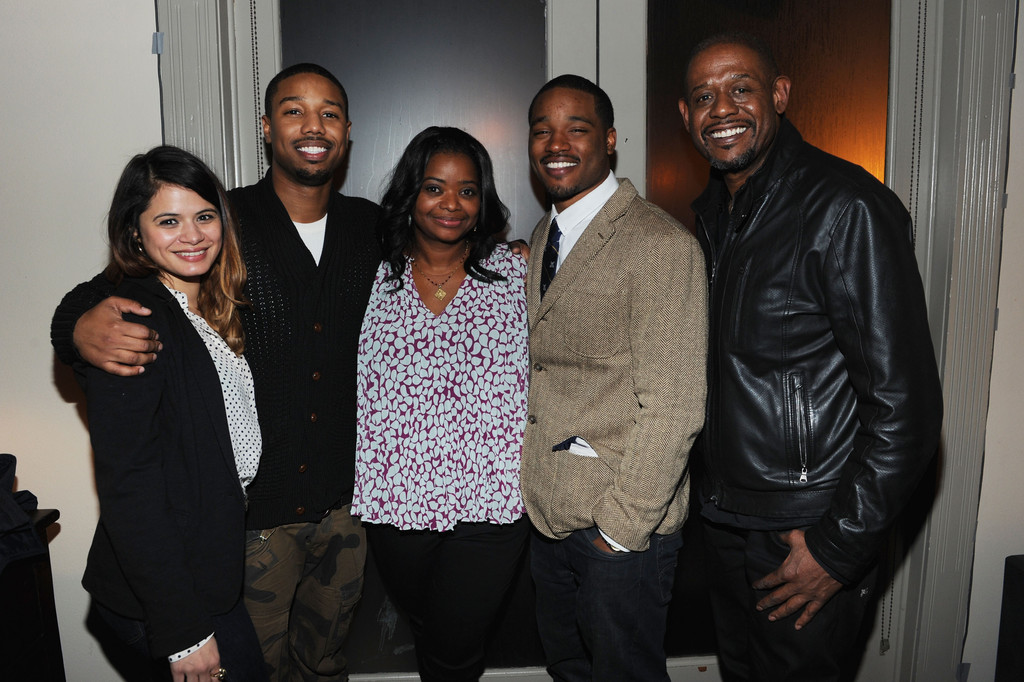 Whitaker: I’m really proud of ‘Fruitvale Station.’ I’m really proud because I think that Ryan Coogler is an amazing filmmaker, and Michael (B. Jordan) did an amazing job in the story. It was very important to be told. I had no idea when I said to him, ‘I’m going to do this and I want to produce this and let’s make this happen,’ where it would sit in the public zeitgeist. The fact that it came out at that time, I think helped some of the dialogue that was going on because there was so many people that had suffered so much pain around this, so many feelings of inadequacy or impotency and trying to figure out, ‘How do we express ourselves and how do we not make this happen anymore?’ So I’m glad about that, and hopefully it stands as a marker for everybody to know that we have to remain vigilant and watchful and make choices to further our existence as human beings who have a right to certain inalienable things, to fulfill, as Martin Luther King says, force the fulfillment of the promissory note in the vault. He talks about this promissory note, which is basically to have freedom and the right to have a decent life and liberty, and he talks about nobody can tell him that the vaults in this country are not full. ‘Don’t tell me that they’re empty.’ So right now we’re in that place. People are talking, which is a big thing because I think acknowledgement and discussion are a big part of healing. Certainly they’re a step for us to move forward towards some form of understanding, and from that understanding maybe we can move to some form where we take away the pain so we can…for our own selves, that we have the love and move into forgiveness in some way or change that allows there to be.
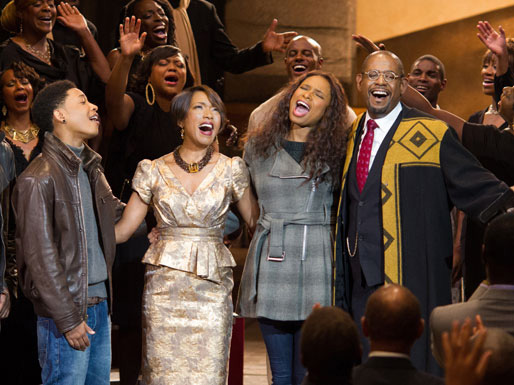
You’ve also got ‘Black Nativity’ coming out with Angela (Bassett). Can you talk a little about that, and when the next time you’re going to get back in the director’s chair?
Whitaker: I think that Kasi Lemmons is doing something really unique and special. I don’t know how I was blessed to be in all of these different films, but I think that ‘Black Nativity’ is really unique. It’s about family, too, because I think ‘The Butler’ is too, about family. In a way ‘Fruitvale’ is about family too. It’s about a lot of things. I don’t want to simplify, but I’m just saying in this movie, the holding together of this family during all of these times is a central piece. In ‘Black Nativity,’ we deal with the breakup between me and my daughter that’s caused us to be estranged, and my daughter sends my grandson to stay with me. So then the family ultimately gets to come back together, even the father who’s outside of it. I think there’s something special. Angela is amazing in the movie. I think this Jacob Latimore is a revelation in the movie. I think he’s amazing in the movie. I got the opportunity to sing a duet with Jennifer (Hudson). I was happy to get to play that part, to play a Harlem preacher.
And getting back in the director’s chair?
Whitaker: I think next year. It takes about every five years I’ll for it. Actually, I think it’ll be a little different. I think it’s going to be a little more maybe male generated.
Is the ‘Exhale’ sequel ever going to happen?
Whitaker: When Whitney (Houston) passed, I didn’t feel as comfortable with pursuing making the film. It was a great loss, again, and I’m not sure how I would do that.