

Last Tuesday, Meek Mill plead guilty to illegal possession of a firearm in a Philadelphia court led by Judge Leon Tucker. The Philadelphia D.A. dropped all charges against Meek Mill. This means that the rapper will no longer be punished for an incident that happened over a decade ago. Meek Mill had been incarcerated for speeding and joyriding on a motorcycle, which was deemed to be a parole violation. The District Attorney’s Office dropped all other charges. Meek Mill is now a free man and will not face any additional penalties after his plea deal. “I know it’s been a long road for you, and hopefully this is the end of it.” Judge Tucker stated in the courtroom at Stout Criminal Justice Center.

The final decision was made a month after the Pennsylvania Supreme Court vacated his criminal conviction. “Meek free. I’m not on probation anymore.” Mill told a crowd of supporters outside of the courthouse. BlackFilm spoke with Tyler Maroney who worked with his partner Luke Brindle-Khym at QRI to help overturn Meek Mill’s wrongful conviction. The team discovered details in Meek Mill’s case, like a guilty verdict based on the testimony of a single witness. They also gathered evidence that was used in affidavits as part of the appeals court decision to vacate Meek Mill’s criminal conviction. The team are prominently featured in the “Free Meek Mill’ docuseries available on Amazon Prime Video. The same team was also involved in the documentary, “The Case Against Adnan Syed.”
BlackFilm: Can you talk about the investigative work you did in the Meek Mill docuseries and how you approached gathering the documentation to exonerate him?

Tyler Maroney: The initial assignment from Roc Nation and from Meek and his lawyers was to examine Judge Genece Brinkley. Because she had put him in prison for four years for this minor probation violation. We spent a couple of months doing that, looking for any evidence of conflicts. There had been rumors swirling that she had undisclosed connections to competing management companies and record labels. Imagine if we had found direct evidence of that—talk about judicial misconduct? Although we learned a lot about Judge Genece Brinkley’s background, her litigiousness and her personality, which was mainly featured in the way she treated Meek. The really groundbreaking evidence was finding proof that some of the arresting officers that were involved in Meek’s original arrest a decade earlier—so, in 2007 had been corrupt. Not only were they corrupt, but they were known to be corrupt by the police department and the D.A.’s office. Which was ultimately revealed when a do not call list came out. It was either in March or April of 2018, which included the name Reggie Graham, who was the same police officer who arrested Meek.
BlackFilm: How did you go about convincing the officers to speak on camera, regarding what happened on the night of the arrest? There was one officer who was saying at that time, Meek Mill was not the same Meek Mill as he is today.

Tyler Maroney: We were not the ones who explicitly asked them to speak on camera. We had spoken to them month’s before in the context of the investigation for Meek’s legal team. What we were doing was interviewing them to try to get context around what really happened the day that Meek was arrested. And whether the version of events that the government put forth was the actual version of events. Those officers, I think you are referring to Jeff Gibson and also Jeffrey Walker we met with them at their homes, we spoke to them on the phone. We got to know them quite well and we got affidavits from them, which are incredibly powerful legal documents that Meek’s legal team used. It was later that the producers based on the information that we gathered for them and the rapport we had with them. They asked if they would tell them the same story to the filmmakers.
BlackFilm: There have been some additional updates to Meek’s story. He is currently out on bail. His upcoming arraignment has been postponed to the end of the month. It looks as though with this docuseries coming out, there is more information that the public will be able to see relating to his case. What do you want the general audience to learn that they didn’t know before?

Tyler Maroney: He’s actually not out on bail. Meek is a free man right now. Because just two weeks ago, the appeals court in Pennsylvania overturned his conviction. So right now he is not a criminal. He is not on probation. He can do whatever he wants. The danger he is facing right now is the District Attorney’s office will rule on August 27th, whether or not he will charge Meek and re-try him. We are still working with Meek and his legal team to prepare for that. That is where the tension is for the month of August.
BlackFilm: What types of preparation are you doing to help him to prepare to go back in court at the end of August?
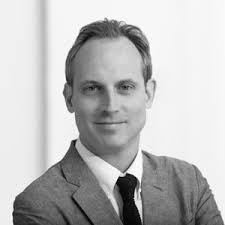
Tyler Maroney: Nothing specific yet, but it’s more conversations about what we would do. The work we did in the first sense was post conviction. Helping his lawyers make an argument to Judge Brinkley who was recused from the case. To make the argument that he was not guilty of the crimes he was accused of. This investigation would be helping Meek’s legal team prepare for a trial. We’re having conversations about what kind of evidence we might gather—like we do in any case like this such as taking a look at what witnesses the state might call. The best example of that is Larry Krasner the D.A. has said that he will not call Reggie Graham. Reggie Graham is the only witness that testified against Meek in his trial. So, if there were going to be a new trial, the D.A.’s office will likely have to bring other witnesses that it cannot rely on. So part of our thinking is trying to access who those other witnesses might be. And how the government might use them against Meek.

BlackFilm: Is the reason why the judge is saying Reggie Graham’s testimony won’t be admissible because of his prior conviction? Do you know what basis the judge made for not allowing him to testify?
Tyler Maroney: It’s not the judge. It’s the D.A. said he won’t rely on him. That’s because he has determined that largely based on our findings Reggie Graham has a history of wrongdoing. Having been investigated by the FBI, he has lied in an FBI polygraph and having been investigated by the internal affairs department in Philadelphia. He is not a credible enough witness that they couldn’t even rely on him if they brought a new case.

BlackFilm: Do you have any other viable witnesses that will be revealed at a later date? Who can possibly speak on Meek’s behalf regarding the case?
Tyler Maroney: Not yet, I would actually ask the lawyers if they have that answer. At this point it’s kind of thinking strategically how we would approach an investigation in anticipation of a trial—at this point it’s all theoretical.
BlackFilm: There were a lot of things shown in the docuseries about behavior that Judge Brinkley, who handled the case had exhibited. There were comments she made about Meek’s hair and how he was groomed—to even showing up to his community service activities that he was doing. These were things that would traditionally fall out of her jurisdiction. You would think that a judge would not take this type of approach with someone who appeared in front of their court. What are your comments on this type of behavior?

Tyler Maroney: It was indeed shocking. If you read the transcripts of what she said in open court, in addition to what Meek Mill said that she said behind closed doors in her chambers. There certainly seemed to be an obsession or a fascination with Meek. That went beyond her duties as an impartial judge. That I think in many ways is what inspired the investigation. Is to try to understand what this was all about—because it was so shocking that not only did she appear to have a fascination with a defendant who appeared in her court. She then made decisions that were so shocking, that put him back into prison. And kept him on probation for so much longer than anyone anticipated. Anyone including the prosecutors who went after him, which was among the most shocking decisions she made.
BlackFilm: What types of conversations have you had with Meek Mill regarding the case?
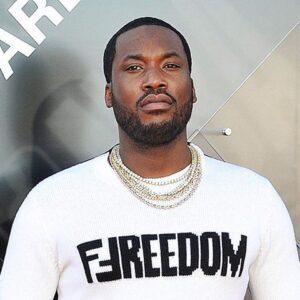
Tyler Maroney: We met with him in prison. We talked to him on the phone. We were very in touch with his family during all of this. Our communications with him were pretty constant. He was involved in strategizing his case and giving advice and planting us with leads. Since he has been out, Meek has been a bit busy as you can imagine. He had a new album come out. By the way on his album he talks a lot, maybe every other track about his experience within the criminal justice system. He has a lot to say on this topic. Since then he has been talking about how he can commit resources and in fact has to fund the Reform Alliance. It is a criminal justice reform non-profit that he co-founded and is now being run by Van Jones. He is quite literally putting his money where his mouth is and doing everything he can to help others who have been through, what he has been through.
BlackFilm: He has been very outspoken about the need for criminal justice reform. What do you want people to learn about the criminal justice system and some of the improvements that should be made, that they didn’t know of before?

Tyler Maroney: I think what is remarkable about Meek’s story is that it puts the kind of narrative. It puts the kind of story that people dig their teeth into —that they can understand. Phrases like “reform the criminal justice system” is broad and it’s hard to understand. You think about what does that really mean? What that means is maybe we should not, when people are convicted of crimes give them short period sentences and then 10 years of probation. Which in many ways is an additional sentence.

Because Meek talks about how he wasn’t able to go to different neighborhoods in Philadelphia without the judge’s approval. He wasn’t able to travel. He wasn’t able to live his life. So he was constantly under surveillance. What that does—and Meek was able to articulate on this. It’s just not him alone. He’s just a symbol of what so many people have been through and are currently going through. I think we have 4.5 million people who are facing probation violations right now in this country —the majority of who a disproportionate amount are people of color. Luke and I our firm the investigations we do focus on investigations that are in the public interest. So if we can in one small way, by helping Meek help expose the injustices of the criminal justice system—then we’re doing something right.
BlackFilm: The five part docuseries takes the audience on a journey from what happened to Meek Mill as a teenager, to all the ongoing appearances he had in front of the judge and ultimately showing more regarding corruption with the police that come forward. It will present the audience with the case, that what happened to Meek is something that should be further examined regarding the initial charges that he received. What else do you want the audience to take away from the series after they watch all five parts of the show?

Tyler Maroney: I think one is with respect to Meek’s own story. We look at celebrities like Meek from a one-dimensional perspective sometimes. When people hear Meek Mill they think the rapper from Philly. Now it’s the rapper from Philly who signed with big names like Rick Ross and Jay-Z. When they watch this they will see that he is much more complicated. He’s much more nuanced. He has led an incredibly difficult life. When the flashbulbs are going off and his album is coming out and he’s on the red carpet. There is so much more to him and there is so much more to people like Jay-Z who have made it very clear that it could have been him. He could have been in the same situation. But in a more broader perspective, I think that we were honored to have been a part of this to bring forth our skills as investigators to help somebody like Meek. I think there are lots of other investigators out there who are doing this kind of work who don’t get the attention that we have gotten. I just want to shout them out as well—for working behind the scenes most of the time. But the biggest takeaway, I hope is that there is hope for the reform of the criminal justice system. We are living in an era where our government is failing us. We have a president and elected leaders that are rolling back criminal justice reforms—which are going to be hurting people like Meek. People who are locked in the criminal justice system. They are locked up literally and figuratively in Meek’s case go and shine that light. We are throwing rocks at the building from the outside and it made a difference. If that is one of the takeaways from this then that is a positive thing—that is happening in this situation right now. Otherwise we are only getting bad news from our elected officials.
The five part docuseries ‘Free Meek Mill’ is now streaming and available on Amazon Prime Video.


Loading…