
From Twitter to Sundance: Justin Simien talks ‘Dear White People’By Wilson Morales
January 24, 2014

Currently playing at the 2014 Sundance Film Festival is the red hot buzz film, ‘Dear White People,’ which was directed by former-publicist-turned-director Justin Simien.
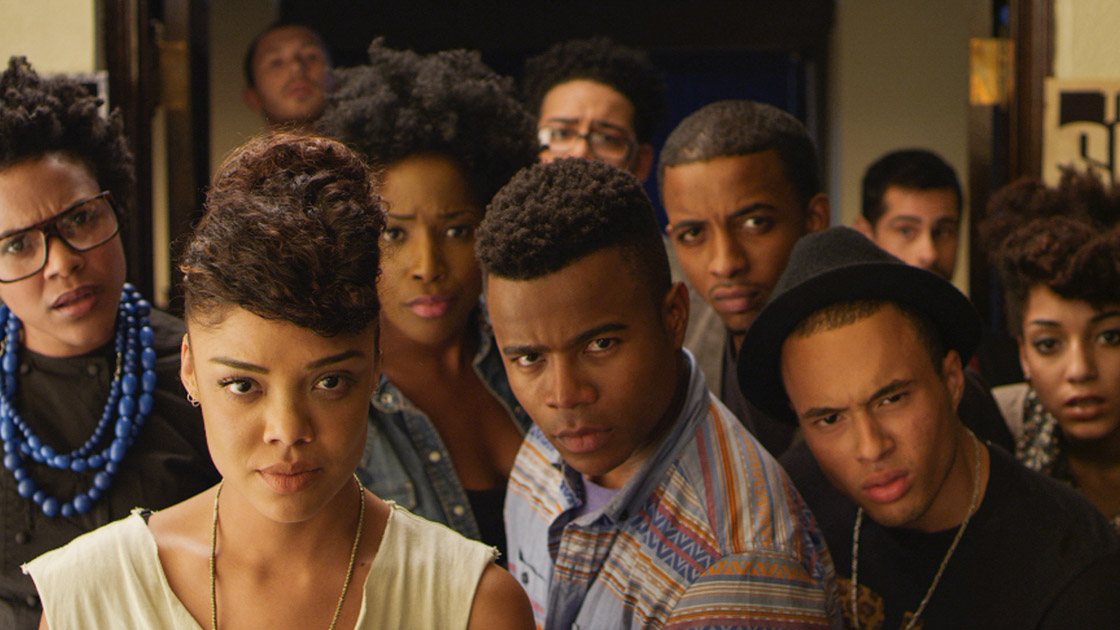 With a cast that includes Tyler James Williams, Tessa Thompson, Teyonah Parris, Brandon P. Bell, and Dennis Haysbert, this very comical film follows four black students at an Ivy League college where a riot breaks out over a popular ‘African American’ themed party thrown by white students. With tongue planted firmly in cheek, the film will explore racial identity in ‘post-racial’ America while weaving a universal story of forging one’s unique path in the world.
As a graduate from Chapman University, Simien used his experience there as an inspiration for the film. With ‘DWP’ attractiing a lot of buzz for some time, Variety recently named Simien as one of its ’10 Directors to Watch.’

In speaking with Blackfilm.com from Sundance, Simien goes over the inception of DWP from idea to trailer to production and finally being shown at Sundance.
How did you put this film together?
Justin Simien: It definitely came in stages. The first thing for me was just getting a script that I thought was worth people besides me and my small group of friends reading, and that led to a trailer we called ‘2%,’ at the time, which is about the two percent Black population at the school. And it was sort of anecdotal and kind of sketchy, like sketches of Black life, token Black life more than anything. The script sort of evolved into a more a simple commentary about what I call the new Black American experience. That’s when I started the Twitter account, to sort of really sharpen the voice of the central character, Samantha White. So the Twitter account was just sort of a way for me to think like her, talk like her and to register, like, a reaction to her in the real world while I was kind of figuring her out in the script. I think in 2011, after a couple of workshops with the script, and the conversation that we were having after the read-throughs were just exactly the conversation that I wanted audiences to have. Then I decided to put my tax return into a concept trailer, just so that I could get into a room and convince somebody to give me a chance to make the movie. We put that online in 2012. It went viral and it became, like, a natural news story. We raised $42,000 to help us get through our pre-production period before Code Red Films came in to finance the rest of the picture. It was all a pretty quick process once the concept trailer went, and we shot the summer of 2013, finished right before the Sundance deadline, and here we are.
 The theme is controversial in some ways. Was it always meant to be a comedy?
JS: It always had satirical, comedic elements, and I think my favorite movies always do. I make no bones about the fact that I really tried to study the ensemble genre. This is a multi-protagonist story, and I tried to really study things like ‘Network’ and ‘Do The Right Thing’ and ‘Election,’ and these movies which, like, depending on which video store you’re in or if it’s iTunes or whatever, sometimes they’re classified as dramas, but they have these really heightened reality, funny moments. I don’t think there’s really any other way to talk about these issues without it hitting that. It’s just kind of funny sometimes when someone’s hands are all in your hair. Sometimes it gets to be serious and can be very offensive, like the black-face party at the end of the movie. But sometimes they’re just kind of funny and anecdotal, and I think ultimately, if people are laughing at themselves, I think that they’ll be willing to take on the material a little bit better and easier.

Was it important to have the story set at an Ivy League school as opposed to a regular school where the percentage of minorities is low?
JS: I wanted to put it in a world that was heightened and put it in a place that was a little bit larger than life. I did not go to an Ivy League school, and in doing research for the film, I just noticed all these really interesting situations that came up for Black people at Ivy League schools. I just love movies that I think operate in a way that I’m not familiar with. I think it’s kind of fun to discover a new world, and Winchester is an amalgamation of all these different schools, but really Winchester is America. Winchester is meant to be the home for the highly ambitious, competitive, sort of like overachievers of America. I wanted to talk about the Black experience that was trying to survive in that setting, whether that setting is a corporate setting, political. To me, I thought, this fictional Ivy League looked like a really cool microcosm to do that, to get into all that stuff.

You worked as a publicist in a big studio for years. How much did working in that setting guide you in terms of putting this film together?
JS: I started doing publicity because I interned at a PR firm when I was in college, as a filmmaker, because I knew that my first movies were going to be for audiences and speak to audiences that maybe studios had forgotten how to market over the years. We’ve been lucky to get a lot of buzz for the movie, but I knew enough to facilitate a way for that buzz to express itself in a way that could be quantified. For instance, with the idea of putting the concept trailer online, it was like, ‘Well, you know what, I think that people might dig this. So we should put it online where people can see the view count and we can give a call to action at the end of the video,’ so that we can say, ‘Hey, there is an audience for the movie,’ and they’re willing to put up money before it even exists, even before it’s even available for them to see. I had no way to predict that we’d make $42,000 in a month, but I knew to have an avenue for that, that you could tap in and if people wanted to show up for that content…and just with the Twitter account and in the trailer, and all of the success that we’ve had online, I needed to do those things because part of the issue with making Black films in Hollywood is proving that there’s audience and proving that there’s an interest. So my publicist brain certainly knew to do all of those things in order to show proof.
You have an impressive list of producers. How did they come onboard?
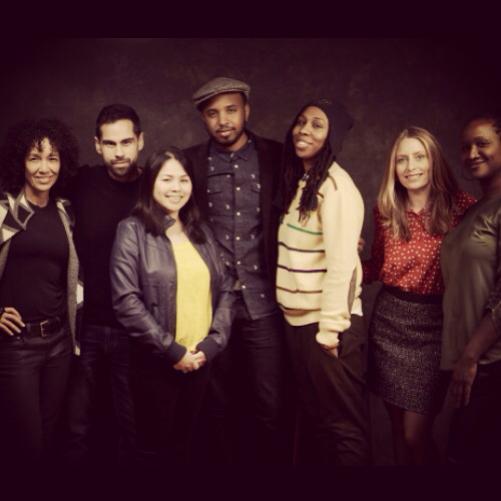
JS: Stephanie Allain came onboard after the concept trailer hit. I have to give a little bit of a shout-out to Angel Lopez, Lena Waithe and Ann Le who together, with me, were the original core that got the concept trailer out there and got the script through several rounds of revisions. But Stephanie Allain saw the trailer and she reached out to Lena and got the script. She freaked out when she read the script, and I mean I just always have bowed down to the altar of Stephanie Allain. So it was exciting to have her onboard. She was like, ‘I’d like to come in and be an executive, or not. Like, whatever you guys need because I want this movie to get made.’ She brought in Effie T. Brown to lead us because none of us had really ever produced a movie before. She brought her around to lead us through the production, and so actually, basically pulled just a miracle. Just getting this movie done on the timeline that we needed to get it done with and on budget and just sort of rocked it. Somehow at the end of September we had a movie. So, it’s an incredible team. I’m very lucky to have these veterans have our back and embrace this new thing that we’re doing because it’s been really great.

Congrats on being named ‘Variety’s’ one of ten directors to watch? How exciting is that for you?
JS: It’s unreal, man. It’s unreal. I just try to do my best given the circumstances with the film. For them to see that kind of potential in me is just great. It’s a validating thing because I left behind a career to really pursue movie making; a career where I could be making a lot more money, I think. And to have it be received in that way is really dope. It’s just really great.
What’s been the reception from audiences at Sundance?
JS: The reception has been amazing, really weird, like rock star amazing. People stop us in the streets and scream out of their cars how much they love movie. Black people are standing up in our Q&A’s and giving testimonials, but so are white people. People are coming up to me from every race and every age, and congratulating me on the film. There seems to be a sense of gratitude, particularly with Black folks that are like just grateful that someone actually said it. I think there’s a feeling that we’ve been talking about this in our community for so long that they can’t believe that someone said it to the world. The same here goes for white folks that dig the movie too. People of all races are really excited that they’re being discussed in a movie. So for me it’s nothing, but praise and energetic excitement.

You have a cast of impressive newcomers. Not everyone knows of Tessa Thompson, or some of the others. There are some veterans, such as Dennis Haysbert and Peter Syvertsen, but was the idea to bring in new actors so that people could see some fresh faces on the scene?
JS: Well, I think what I always love about watching early Spike [Lee] and early Robert Townsend is when you’re like, ‘Whoa, that was that person’s first film? Now they’re just huge stars.’ I think first of all we’re telling a story that’s really new. We’re putting Black characters on the screen that haven’t been there before, and if so, in decades. It was really important for us to not sort of have a typical Hollywood movie and just put people who were a hundred percent right for the role and could bring something new and fresh to the characters. We always expected that the kids would be either newcomers or people who you haven’t seen in this way before. I think Tyler (James Williams) is probably the most known of the faces. No one has seen him play a character like this before, and I don’t think anyone has really even seen him get to stretch or show his talent as an actor like this before. I’m just really proud of these guys and this is just the tip of the iceberg of what they can do. They really are phenomenal, phenomenal talents, and to get to see people that I haven’t heard of and discover these people for the first time is amazing. I got to walk the streets with Tessa, and at the time she hadn’t seen the movie, but people were just sort of walking up to her and telling her that they loved her. I don’t think she expected that, and it’s really just kind of cool for people to rediscover her again.

Has your film been picked up yet?
JS: We’re having a lot of really interesting, exciting conversations with distributors. I think the key for us was not to come up here and make the quick, splashy sale. For us it’s about making sure that the movie is done justice and not to just take the highest or the first offers. We really want to take our time and not only make sure that financially it really does well, but also that it gets distributed right. It’s been a long time since this kind of movie happened, and the last thing I want is for it to be treated badly and for it not to reach it’s true potential. So, we’re in really exciting times right now. I’m having fun every day with this really amazing people, but as of yet we’re still figuring out where the right home is for the film.

Do you have an idea what you want to do next?
JS: There’s a couple of projects that I’ve written. I think that people will see them, whichever one goes first. I’m a multi-tasker and I tend to work hard and go with whatever sort of hits first. I think that people will see them as a departure from ‘Dear White People,’ but also see a similar, really satirical choice with a commentary streak. I have a television project that I’ve been producing and will be directing with Lena Waithe, and we also put some content online that did very well. It’s called “Twenties” about three black girls in Los Angeles who are figuring out their identity and muddling through their twenties. Even though that’s something that I have not written, it’s very exciting to direct that and really showcase Lena’s incredible voice and talent as a writer.