
LimitlessAn Interview with Bradley Cooper
By Max Evry
March 16, 2011

In Neil Burger’s new sci-fi drama “Limitless,” Bradley Cooper (“The Hangover”) stars as Eddie Morra, a down-on-his-luck writer who’s teetering on the edge of complete failure in every aspect of his life. By chance, an old acquaintance from his past gives him an experimental clear pill that unlocks the full potential of his mind. Once Eddie gets hold of a large supply of the drug called NZT, he sets out using his newfound cognitive gifts for personal gain, that is until external forces combined with the side-effects of the drug all conspire against him.
While in New York to promote the film, Cooper spoke to Blackfilm.com about the film, working with co-star Robert De Niro, and the upcoming sequel “The Hangover 2.”
Will you tell us a little bit about Eddie Morra? Who you saw him as a character and how you came to choose this role.
Bradley Cooper: I read the script maybe eight months ago that Leslie Dixon wrote based on a novel by Alan Glynn, an Irishman who I think wrote it in 2001 called “The Dark Fields.” I didn’t read the novel until after I got the role. I didn’t even know it was a novel. But she wrote this incredible script, just a really incredible script, with a phenomenal character. His last name wasn’t Morra then; it was something else. And I met with Neil Burger because I just thought oh wow, to play a guy that goes from A to Z like that would just be incredible. And so I met with him and just tried to basically pitch him why I had to play it, and then I think about six months later we got the offer to do it, and then it was about just hopefully getting it made. The question was just “What did I think of Eddie Morra?” Yeah, I loved him. I liked the idea that when we meet him it’s not that he feels sorry for himself at all, he’s just actually resigned to the fact that his life is such that his potential wasn’t fulfilled, and that’s where we meet him that day. There’s something about that. It was cool when he had a book contract when he was 25, and he talks about how great it’s going to be, but when he’s 35 and it still hasn’t been written it’s just not cool anymore. To then see a guy who goes from this complacency to then having power, and what he does with that power, and what his plan is, which I still don’t know what it is. You’re left in the movie you really don’t know. His plan was not to make money at all. He says when he comes out of the water “I had a plan and money was going to allow me to get there.” But in the end he’s in politics so what was this guy up to? And I liked him; I thought he was a good guy actually. I liked playing old Eddie a lot. The crew did too. We would lament the days where the wig wasn’t there.
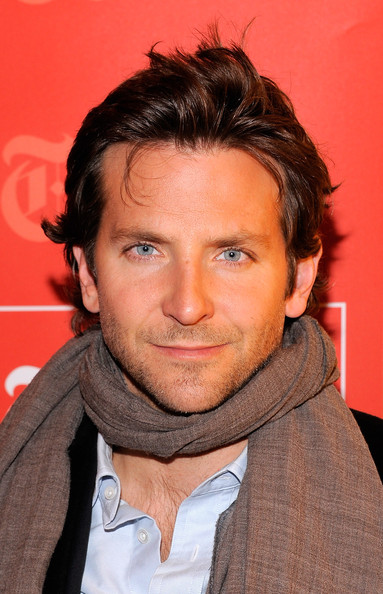
Once Eddie has access to this drug of course he finishes his book but then he undergoes a series of career changes. If you had access to a drug that perhaps made your potential limitless do you think you would still be an actor? Would you venture into other areas?
Bradley Cooper: I’ve obviously thought about this just from the questions and I think for sure I would definitely try to learn as many languages as I could right away. And then I would probably after that, much like he did, learn as many instruments as I could. After that I don’t know, but I would probably try to get money so I could go around and utilize that. But it would be incredible to just start jamming with all these great musicians and communicating with people wherever you are in all the different dialects. I mean it would be incredible. I don’t know what I would do after that, but I would still be an actor and directing. I would probably start finally getting off my ass and facing the fear because all I really want to do is direct movies anyway, I just haven’t done it.
What type of movies would you want to direct?
Bradley Cooper: Just do stories that I love. You have to as a director. There’s got to be something you want to tell, and that’s the engine which spurs all of the work that you have to do in order to create this story. But you have to love some sort of nugget of what you’re telling, I think, to be a filmmaker.
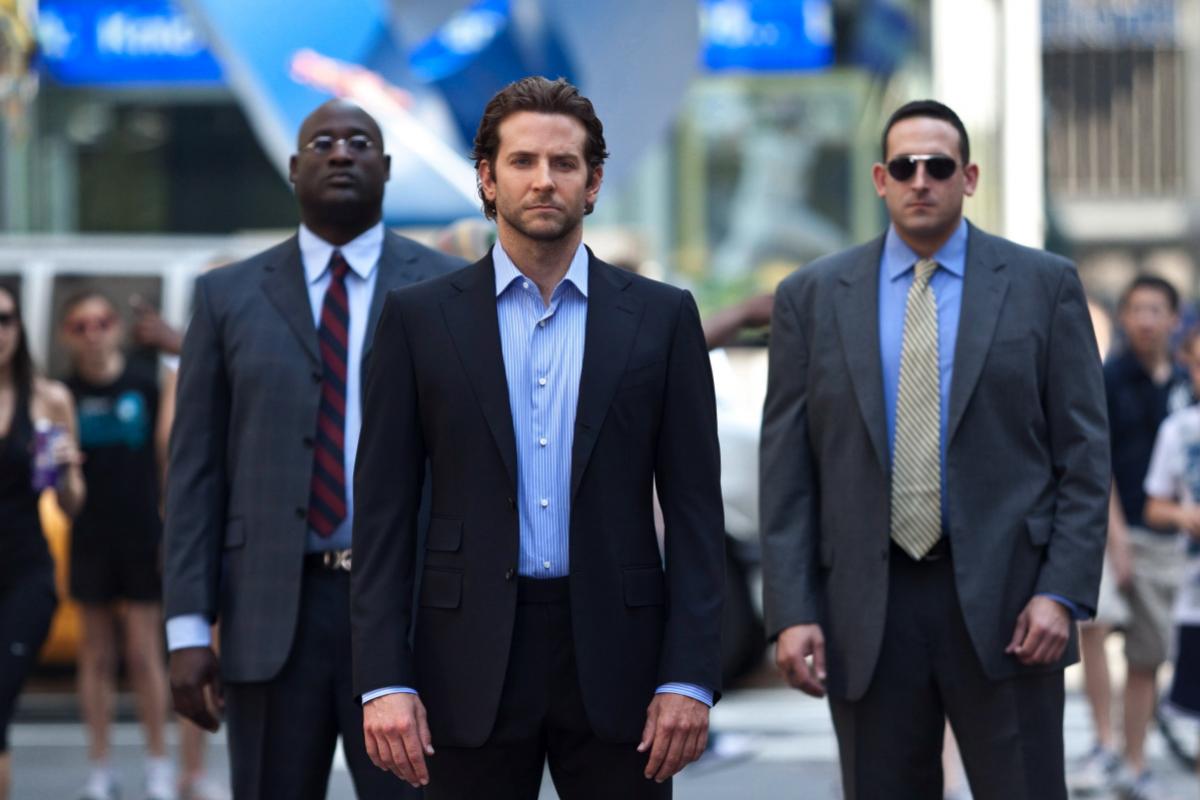
This movie rested on your shoulders. What challenges did this role create for you personally?
Bradley Cooper: I didn’t feel like it rested on my shoulders because I didn’t direct the movie. It’s Neil Burger’s film. But I was allowed the opportunity to help be the guy in the field to play this character that the story revolves around, and I loved it, which may wind up being my downfall. I made myself a very small window of what I enjoy in this business, which is I love being a big part of the storytelling process; it really fulfills me. Whether or not I’ll get that opportunity again I don’t know. I hope to. If this movie is successful then I probably will, if it’s not then it will be harder to. But I absolutely loved it. I love that pressure, because to me it’s excitement, especially when you know what you’re doing. I found a hook early on reading this script, so I never felt the pressure. I just couldn’t wait to get out and play him each day. I couldn’t get enough of it. And I enjoyed the aspect of the drug. I tend to speak very fast and so I liked these paragraphs that I had to memorize and speak, because when he’s on the drug there’s no “you know” or stutter or anything. He thinks in these succinct paragraphs that just come out, and I love doing that. And Neil shot a lot of those in one so there was no cut, it was almost like doing a play. I loved that experience.
So when you were coming up in the Actors Studio would an enhancement drug be something that you were interested in taking?
Bradley Cooper: Yes.
Talk about that aspect of this being so available to kids still. Adderall, Ritalin.
Bradley Cooper: Oh that I don’t know anything about.
It’s dangerous that we’re not really looking at it as a serious drug and kids are just taking it.
Bradley Cooper: Well, in terms of this movie whether it helps to provoke questions and conversations like that that is what it is. I didn’t set out to do that as the actor and I found this movie being a compelling story about power and what you do with power much more than drugs. It goes from a guy who all of a sudden has power and how he utilizes that power over other people and over what he can accomplish, and when you abuse it and whether you treat it with respect. Now if a drug can be equated with power then it becomes a conversation about the drug, but nothing specific to that.
The first thing you did when you were taking the drug was clear your physical surroundings. How important do you find that aspect?
Bradley Cooper: I definitely am a huge creature of my environment. It dictates my emotional state to a huge degree, so yeah, environment is everything. I like the fact that he mentions “What is this drug? It makes you anal retentive. What the hell is going on here?” And sometimes I like being in complete chaos and other times I like it to be clean. It’s not one thing all the time.

When it comes to thriller/dramas like “Limitless” versus “The Hangover” that’s more comedic, what mindset do you use to prep for either role?
Bradley Cooper: Same mindset. It’s completely the same. It’s playing a role and whatever that happens to be may demand different ways in but the structure’s the same. You have to prepare. Acting’s acting, whether it’s comedy or drama, there’s a music to it, and the music changes with comedy. That’s all for me.
What’s the difference between the kind of adrenaline rush that focuses you when you’re acting and the experience of the drug that gives you access to all of this extra information? And you spoke earlier about your choice of storytelling and how you feel the necessity to have a kernel of something that you love in it. So if you could term that kernel an essential truth for you what would it be?
Bradley Cooper: I made things specific for me because the idea of reading up on the way neuropathways operate in one’s brain and how synapses function wouldn’t serve me in terms of organically inhabiting that idea. I had to find something specific for me, which had nothing to do with anything like that, in order to play whatever that expansiveness is in my mind. I didn’t choose the feeling of adrenaline from doing something, whether it’s playing a sport or getting into a fight or acting on stage, just because to me my experience sensory-wise with that is…maybe I should have. I probably should have; it would have been better. But it feels like I’m on a drug when those endorphins are released. And for me NZT it wasn’t a drug; it didn’t feel like I was on a drug. It was just clear and focused, nothing different. It was just calm, there was a calm to me when I was doing it that I worked on. And he actually says that when he says “I wasn’t high, I wasn’t wired, I just knew what I wanted to do and how to do it.” And that was it right there. Just focused, and the ability to focus. It was almost like lasers focusing in all these different directions at the same time. The nugget, if it’s a truth it’s love because I have to love something in order to have it mean something to me, but it changes for everything. It was a moment in the script that I read where I thought oh yeah, I have to do everything that I can to try to play that role. It was one moment. It was when he drinks the blood. When I read it in the script I thought I’d never seen that before, and if it’s pulled off the movie works. If it doesn’t it fails. And in that moment if the audience is laughing at the movie the movie doesn’t work, but if they’re laughing because of what the hell’s going on and I feel weird and this is crazy, that’s a good thing. But for Eddie it’s an example of how low or where he’s willing to go to survive and to maintain whatever it is that power that he has. And I just sort of love that how do we get from this guy in the beginning of the movie to that moment? That I need to play, I need to experience. For every movie it’s been a moment. For “Hangover” it was the phone call when I call Tracy. It was more like I just saw how it was going to be and I thought I would love to do that. The blood drinking? We had to adhere to ratings and stuff like that, so it wouldn’t be exactly, but yeah, it’s say so.

Do you see this as a monster movie?
Bradley Cooper: I don’t see him as a monster, so in order for there to be a monster movie he’d have to be the monster, and no, I don’t see Eddie as the monster at all. I don’t think he killed her, but he may have. I’m not the one to tell. Once the movie’s out there your opinion of what Eddie did is just as valid as mine; there is no difference. But he certainly isn’t a hoarder of merchandise. It’s interesting how he’s used his power in the movie. It’s not to make money. We don’t know where he’s going. I didn’t see it as a monster movie, but that’s interesting; I like that idea. Because monsters might be good too; who says they’re bad?
Could you elaborate on some of the super powers he has.
Bradley Cooper: Anything he’s ever seen, heard, tasted, or smelled since basically in the womb he can recall in an instant and utilize for whatever way he wants. By the end this idea that the drug has evolved as such that he’s able to utilize physics in every possible way so that he’s able to read the temperature of where he is when he puts his hand on his skin. You wouldn’t be able to tell whether the walls of his heart are dilated but somehow he’s able to have a connection with the blood and the flow and whether there’s a blockage and stuff that like. You know, normal shit. And looking at behavior, he could tell that guy was texting and then he was able to figure out there are 60 feet and in order to stop given that make of the truck and the way the breaks work that 30 feet wouldn’t be enough, that he’s going to rear-end the taxi. So it’s not like he’s omniscient at all; it’s just all logic, but he can do it like that. Not like Superman, but if you saw someone texting you could probably see their heads down while they’re driving. It’s as if you were literally watching that van you could probably tell 60 feet out, 30 feet out that he’s texting. It’s not like his vision all of a sudden has improved because of the drug at all, it’s just how he’s able to utilize his brain.
With “Hangover” your career really took off. How did you experience this? And I read somewhere you wanted to become a chef.
Bradley Cooper: Why am I not a chef? Clearly, being a part of a movie that’s so financially lucrative provides opportunities, and that’s what that movie did for everybody, from the DP to everybody. And with that comes a higher profile, so you have paparazzi, that was a new thing, that you just have to learn to navigate. The great part is that I was able to do a movie like “Limitless.” Maybe Relativity wouldn’t have hired me to do it if I hadn’t been a part of “The Hangover,” which was so successful. I love cooking. I was more interested to play a chef than to be a chef, so I think that told me early on that acting was where I wanted to go.
There are a lot of rumors about Charlie Sheen being in “Hangover 2.” Can you confirm or deny?
Bradley Cooper: Unless they have a time machine and we can go back go Bangkok my understanding is that we already filmed that movie. So I’m not quite sure. It’s an interesting thing to start spreading, but you’d have to be a part of the Starship Enterprise in order to make that happen.
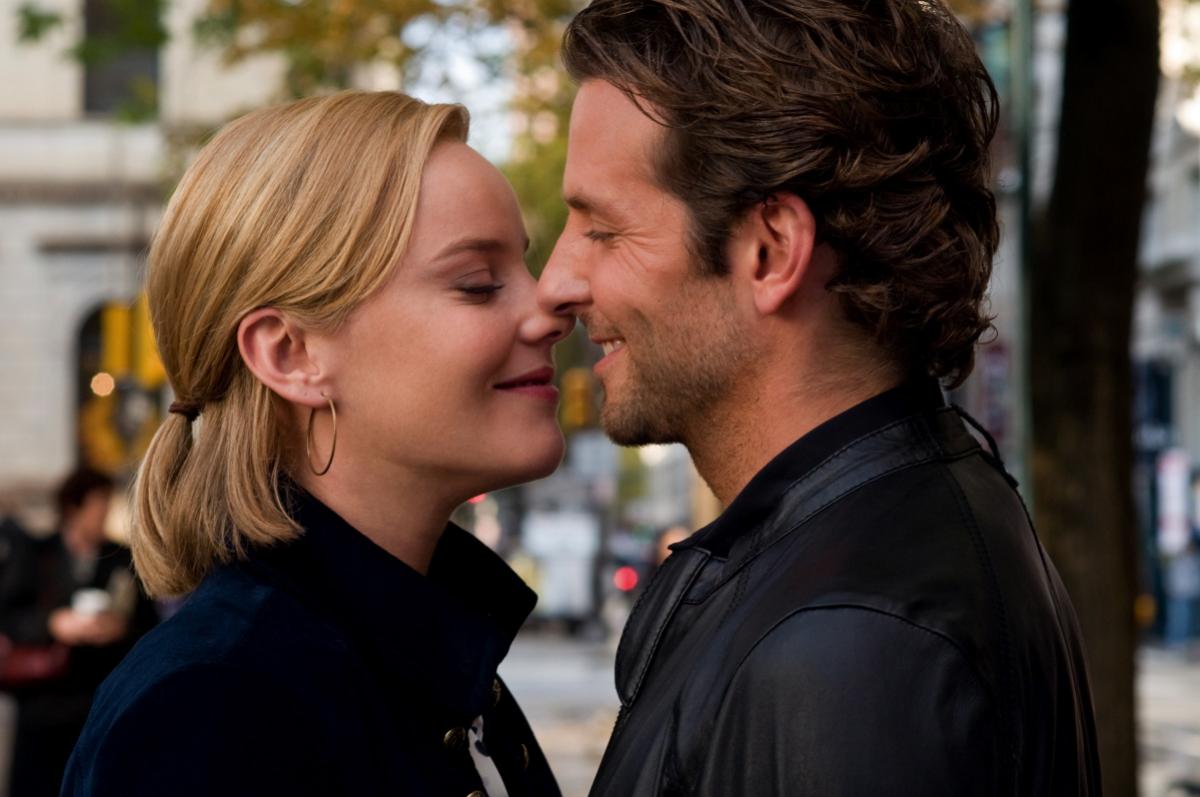
The “Hangover” franchise has had a major effect on your on screen image. Has that cause you concern? And in that context how important is it that you’re doing movies like “Limitless”?
Bradley Cooper: It doesn’t scare me only because I operate pretty simply. I want to work with great filmmakers and great actors and get better as an actor; that’s basically it. And what that usually means is it’s not going to be the same kind of movie or the same genre or the same role. So by hook or by crook I’m going to try to get different roles just because I’m operating under that premise. Doing a tv show like “Alias,” for example, I played probably the nicest guy in the world, this guy Will Tippin, who was a journalist, and I would audition for movies during that time and afterwards and normally the feedback would be “He’s such a nice guy, Bradley. I don’t really see an edge, but such a sweet guy. Please tell him we loved meeting him” And then David Dobkin took a real chance and hired me as the heavy in “The Wedding Crashers,” to play a sociopathic bad guy. And then it became “Bradley; he’s an asshole, right?” I mean really. “Because it seems like he’s really an asshole. He wasn’t acting, I could tell. There’s something really deep going on.” Elia Kazan said “If you’re going to audition to play a cowboy you better show up with the horse.” It’s beyond my control who’s going to cast me or how you’re going to be pigeonholed. So for me it’s just basic I want to keep doing different things because I want to get better. So hopefully I’ll be hired to do them. So “Hangover” was a huge success; will it mean that I’ll be cast in movies like that? No, because I won’t do movies like that. But then it also might mean I’ll never work, so we’ll see.
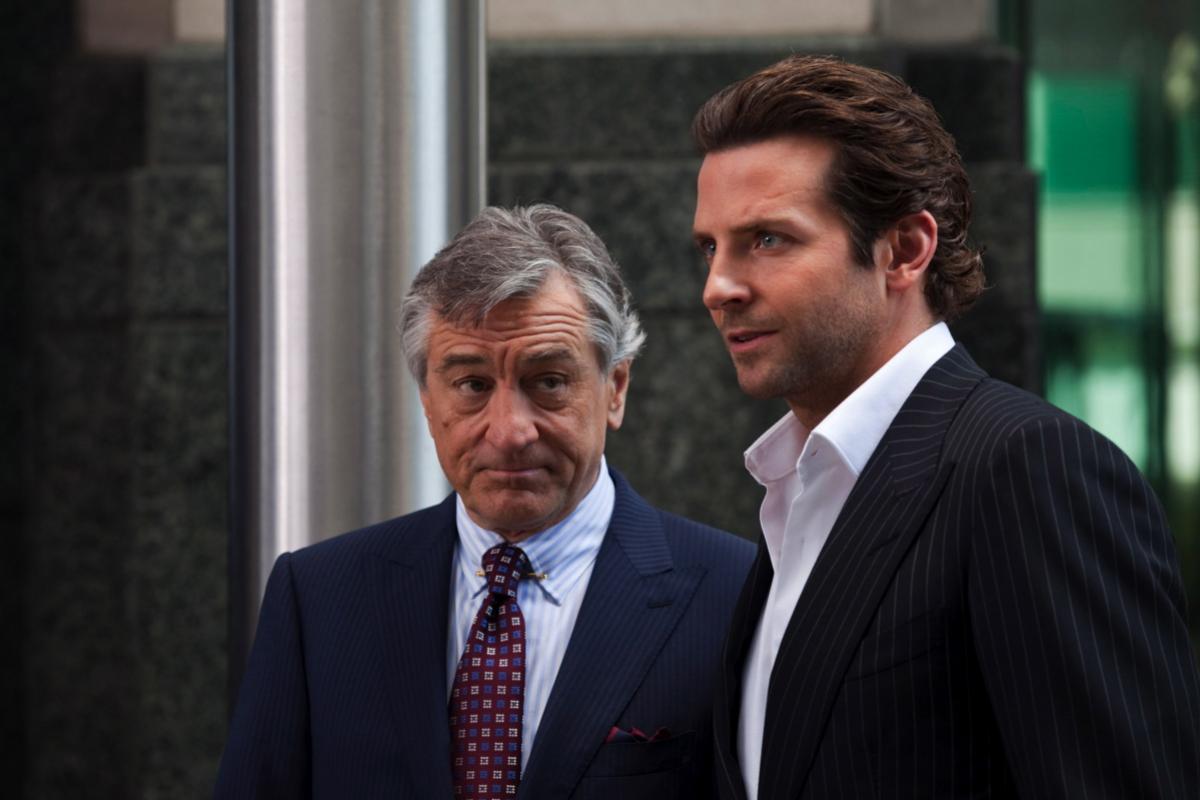
What about Robert De Niro? What’s it like to work with him?
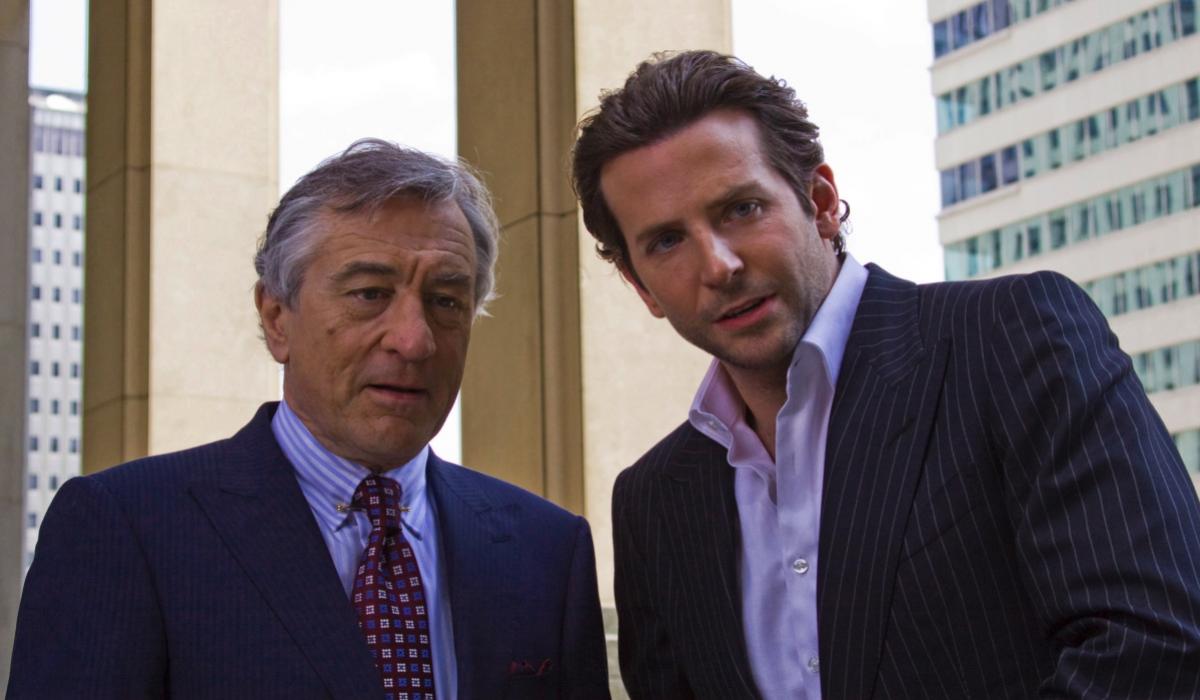
Bradley Cooper: Talk about icing on the cake. Never when I first got the movie did I think that Carl Van Loon would be played by Robert De Niro. My past with him, without him knowing it, goes back a long way, just because he’s the reason I became an actor pretty much. And then I went to school at the Actors Studio and the [21:34] program here in New York and he came to our school and I asked him a question that meant the world to me.
Do you remember the question?
Bradley Cooper: I wanted to ask him the question I asked, but I was so scared that it was such a stupid question that I was going to ask some bullshit question about “The Mission.” I was going to say “Hey, did you train with swords?” and some stupid thing, and right before someone stood up and asked him about “The Mission.” And I thought well I can’t ask him about “The Mission.” So then they came to me and I was sort of standing there and all of a sudden the real question I wanted to ask him came out, which was “When you were doing ‘Awakenings’” there’s a scene where he wants to go for a walk and he has to be interviewed by the medical panel. And he’s trying so hard to be normal, but whatever he was taking it started to not work anymore, and so he’s starting to get the tick. And one tick was with his right hand and he would make up for it by pretending to brush his eyebrow. And he was like this when he was talking and I thought it was so genius. And I asked him “Was that something you saw people do, because if they were embarrassed by their ticks to make up for it some way or is that something that just happened?” And then he literally went like this, he went “Yeah, no I didn’t see anybody do that, but that’s a good question.” It was like a beam of light shot into my chest. I was so excited. And I never sat down too and I looked around like did everybody hear that? He said that, right? So that was the first experience with Robert De Niro. And then I put myself on tape to play his son in “Everybody’s Fine,” this movie that he did recently, and my mother played him and we did it in Venice in my house in Venice. I put myself on tape because I couldn’t even get an audition for it, and he somehow saw it and wanted to meet me. So I met him at his hotel, my mom and I drove there, and I was there for like five minutes and we sat down and he was like “You’re not going to get it. But you have it, I see you, I see you. Okay.” And then he goes “Who was reading the other role?” I said “Oh that’s my mom that was reading it.” He goes “Yeah, I thought that.” And then that was it and I left and my mom said “What happened?” I said “I didn’t get it. But he said I have it, he sees it.” And then cut to I was a juror for the Tribeca Film Festival so we’re at this lunch a year later, and I sit down next to him and I was like “Hey, how are you doing?” I was like “I auditioned for the…” no idea who I was. And he actually said “”This Boy’s Life’?” No way; when I was like 12? No. And then cut to I’m sitting in his hotel room in LA pitching him the idea to do “Limitless,” which is so crazy. Because to make it worth the while for any actor we combined two characters. Originally in the script 12 months later is a completely different character that comes to his office and says “We know you’ve been on the drug.” So we combined the two and made Carl Van Loon both characters. And he was great. At that meeting it was like I was on the drug; I did not stop talking. Because one thing I learned about him is he does not like small talk, which was great. So I got into the hotel room I didn’t say “Hey, how you doing? How’s the room?” I just sat down and said “Okay, so,” and I spoke for like 15 minutes. And then he went “Let me give you my cell,” and he gave me his cell, and then we were like texting ideas and then like two days later he said “I’ll do it.” And Leslie Dixon and Neil Burger; it wasn’t just me; it was a full assault to try and get him to do the movie. So by the time we got there to shoot it was effortless. Plus I’ve seen him in so many movies I felt such a connection to him. So it was wonderful, wonderful, and I hope to work with him a lot in the future.

What was the De Niro movie that made you want to be an actor?
Bradley Cooper: It was moments. “Raging Bull” was the first thing I saw him in, but I was so disconnected from it all I could get was the emotional experience that Scorsese was creating, not really was De Niro was doing. But “The Mission” when he’s carrying the rocks up to the mission there was something about that moment when he lands and he’s crying and they’re touching his face. “Awakenings” when he dances with Penelope Ann Miller in the hospital and then she leaves and he’s holding the. And then of course “Deer Hunter,” “Jacknife,” and so, so many movies. “Falling in Love,” when he played Capone in “The Untouchables.” So, so many. I loved him at the end of “Brazil.” I mean I’ve seen everything.
And yet you’re not mentioning the “Fockers.”
Bradley Cooper: That’s my own little secret; I just keep that to myself.

Is he sufficiently grateful that he’s returned to drama?
Bradley Cooper: Well he hasn’t returned to drama. He just did “Stone,” which I don’t know if you saw that performance. And in “Everybody’s Fine,” he was incredible in “Everybody’s Fine” when he has a heart attack in the bed and he thinks he’s seeing everybody. That performance is incredible. It’s just about what is the box office success, people think that’s all they’re doing, but he does dramas all the time.
Did you ever feel like Eddie at the beginning of the film?
Bradley Cooper: Sure, oh absolutely. Oh god yeah. As a human being, yeah, sure. If anybody’s in touch with themselves, do you feel worthless at points in your life and things aren’t going to happen in the way you wanted them to? Yeah, sure.
When was that for you?
Bradley Cooper: Today. Just now. Just when I was speaking.
I want to ask about the scene where you’re shooting yourself multiple times.
Bradley Cooper: That was all Neil Burger, who directed the movie who came up with all that. I had only seen it in “Being John Malkovich.” I had never seen it before except in that movie. It was very time consuming and it was a movie that we really were slammed for time. It was very get up and go and so it was very mathematical. But I really enjoyed that. I liked having to act within the structural confines; there’s something interesting about that because you have to be able to be organic in that little space. Not necessarily that stuff, because I was just cleaning the apartment. You have to be very precise. I always loved the idea of Wes Anderson talking about “Royal Tenenbaums” when there’s that scene with Gene Hackman telling Angelica Huston that he’s dying. And it’s shot sort of like this but Hackman only could go in that part of the frame and she could only go right to there. Having to act within that structure is very exciting I think.
Limitless opens on March 18



Loading…