

Robin Thede is the creator, showrunner and executive producer of “A Black Lady Sketch Show.” Issa Rae (Insecure) collaborated with Robin as an executive producer to bring the hit sketch comedy series to the small screen. Robin’s big break came when she was the creator, executive producer and host of “The Rundown with Robin Thede” on BET, which was ranked on several Top Ten lists and hailed by publications like The Hollywood Reporter, Deadline and Vulture. Robin has written for comedians like Chris Rock, Kevin Hart and Jamie Foxx. She was also a head writer on “The Queen Latifah Show” and a writer on “The Real House Husbands of Hollywood.” A Black Lady Sketch Show was just added to TIME Magazine’s Best TV list. BlackFilm talked to Robin Thede about how the historic project came together.
BlackFilm: How did you come up with the concept to make the series? You’re making history just with the fact that you have Black female talent that you are showing in front of the camera. You also have an all female writers’ room. Can you talk more about how you and Issa got together to create the show?

Robin Thede: I’ve been doing sketch comedy my whole life and I studied at Second City Chicago. I was on “In the Flow with Affion Crockett” on Fox. I was on A Guy Walks Into a Bar on CBS. This is my sixth sketch show. It’s the first one I’ve created. I’ve done a lot of sketch in my career. Even in late night, I was doing a lot of sketches on my late night shows at The Nightly show—then on my show The Rundown. I used to make Funny or Die videos for years. This was a no brainer for me; I performed with several all Black women sketch groups live. So when I knew that I would have the chance to bring that to television. It was always something that was in the back of my mind. So when The Rundown got cancelled last summer, I actually had already started soft pitching this show. I was considering when I would be able to shoot it and then The Rundown got cancelled. Issa Rae called me and said what do you have. Issa Rae and I have been friends for years. I told her about this sketch show that I was already kinda taking around town. She just said I have this deal at HBO. You have a relationship already with the folks at HBO. Let’s make it together. So I went in and pitched it with Issa by my side and then they bought it in the room. It was great. Issa just let me do my thing. She is the biggest cheerleader for this project there is. She let me come be a part of her home at HBO. But respected the vision I had for it and let me do my thing.
BlackFilm: You have a Black female team in the writer’s room. What is it like with the conversations that you had in the writers’ room? A lot of your sketches are witty. There also cultural references. The use of Black hair products or the sketch with the Ginuwine conversation about whomever you and anybody else was into at a specific time. There were a lot of cultural references that I was able to pick up on. I appreciated seeing that level of representation in a show like this on screen. What were the types conversations you had in the writers’ room when you and the team were working on the sketches?
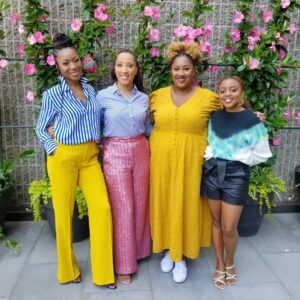
Robin Thede: Yeah, well that’s dope. I’m so glad that—that resonated with you because that is exactly the point. That’s the part of the interstitials that is so cool… The conversations that we were having with the four women. We wanted to have a show within a show. A lot of sketch shows, I would come out on stage in front of an audience tell a few jokes and then throw to a sketch. I didn’t want to do that. I wanted to have this show within a show. Where we could showcase the four core cast members playing larger than life versions of themselves, but having real conversations that we think Black women will have. Not all Black women certainly, but that some Black women. These four Black women were having that and we can represent different points of view. They often don’t agree. They often have different stories and different points of view. That was largely coming out of the writer’s room when crafting these characters. But also using a lot of our real life stories. Our own real life references and points of view. You just get a really authentic piece of comedy, when you have it created by women who have lived these sorts of experiences. That was really fun for us.
BlackFilm: How did you get so many guest stars to participate on the show from Angela Bassett to Laverne Cox? Patti La Belle makes an appearance. Which is hilarious. I also liked the variety of references in some of the sketches. For example, I loved the Romeo and Juliet sketch. That update where you had the Cardi B and Nicki Minaj type of feud with that sketch was adorable. You also had your recurring character where you played the husband with Quinta. Your interaction was really great. Can you talk more about that aspect of the show?

Robin Thede: Rome and Julissa and Patti LaBelle aired this Friday, which was great… They get crazier every week and starting in episode three people started to see. Okay, I understand what the show is; it can be literally anything and everything. We couldn’t have started that way because I think we needed to get people’s feet wet about what we were doing. Then we can take these big swings and have Patti LaBelle up here and do what she does in a sketch. So for us guest stars just wanted to do the show because of me, Issa and HBO or a combination of all three.

I think also the concept of A Black Lady Sketch Show having never been done before in history. First Black woman to create it, first Black woman to head write it. First Black woman to show run it, first Black woman to direct it. First all Black woman writer’s room. First all Black woman cast. All these firsts happened with this show. I think people knew it was history in the making and they wanted to come and have fun with us. We got really, really lucky and we got dozens of guest stars. We thought we would only get five or six. We got 40 or 50. It’s insane how many we have. But if I didn’t do it in a way that was organic… It was important to me that celebrities didn’t take you out of sketches. It was important that they organically appeared there or if we were acknowledging that they were famous. It was like the sketch we wrote for Patti LaBelle. We didn’t write sketches for anybody except for Patti LaBelle and we knew we wanted Angela Bassett in the Bad Bitch support group. Because who else would be the queen of Bad Bitches? But other than that, celebrities were just paired up with roles that we thought would be right for them. We wrote sketches first and content first and characters first—then we cast.
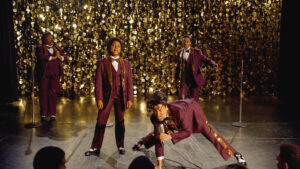
We weren’t writing for specific celebrities. I think that is what makes the difference on our show. That’s why it feels so organic when you see Laverne Cox or you see Yvette Nicole Brown or you see an Amber Riley in a sketch. They are playing characters that we already spent time crafting. They are just putting their great spin on it and their comedic take on it. We are not writing a specific sketch for them necessarily. Because we know they have the skills to be malleable and jump in and embody these characters. That was the fun part of the show for us. And then the recurring characters like Chris, Hertep and Invisible Spy, Trinity and all these characters that come back throughout the season. That was really to help root the audience with a familiarity.

Similarly to the way the interstitials do. The interstitials bring you back to the house with the four women over the course of four hours after an Apocalypse. You root yourself back to familiar territory, so for us it was a way to, with the recurring characters and the interstitials to get the audience ownership in the show. To say I know that character, I saw here before. I know what they are about. Also when you have recurring characters, you can have more fun with the jokes. Once you already know who the person is, you don’t have to teach the audience who they are. They already know and they are on board for you to go to crazy places. The second time you see Chris on the show on the airplane, versus the wedding it gets really crazy. Because you don’t have to explain who they are to set up the game. You already know the game.

BlackFilm: With the 227 sketch. How did you get everybody? First of all as soon as I saw you on the screen. I thought you were Jackee Harry. Your impression was spot on.
Robin Thede: Thank you.
BlackFilm: How you looked like her as well. There was the voice, the mannerisms. How did you assemble the original cast members to have that surprise at the end?
Robin Thede: I prayed to god and said please let the original cast do this. [laughing]
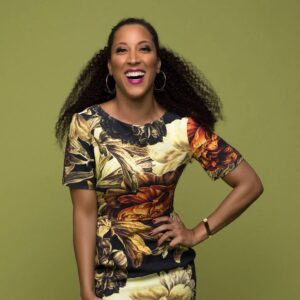
I’ve been playing Sandra, Jackee Harry’s character Sandra for two years in a show called “227 The Lost Episodes” at Second City in Los Angeles. As had Ally Walker, Danielle Gather, Thomas Faller, the other people who play their characters in the reboot. The reboot slash nightmare sequence. I already knew we had a cast who could do the reboot part. But it was really important if we only did it if we got the original cast for most of them. We sent them the sketch. We said we want to do this to give you your flowers. This is a tribute. This is not making fun of the show. This is homage to a show that meant so much to me. I wrote them letters and I just told them the show meant so much to me growing up. It was my favorite sitcom growing up. I still watch it to this day. I have everything on dvd. It’s just one of these purely genius shows that meant so much. Not just to me but to Black people in general. We just wanted to do this for them. Honestly, they all said yes. It wasn’t even a hard sell. I think they were excited about taking part in that and Marla Gibbs made sure that we got Curtis Baldwin to do that really sweet moment at the end. She just said that I want you to get Curtis too.
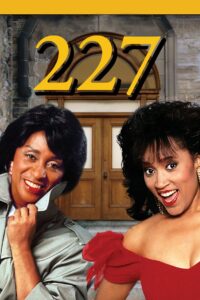
I was like what? Do you have Curtis’ number? Let’s get Curtis who played the original Calvin. I thought about what should we do with him. Because he wasn’t in the original script that I wrote for the show. He came on kinda late, so I was thinking we can do this pretty cool tribute to Helen Martin. And also to the lady who played Rose [Alaina Reed]. In the moment in the window. We knew we could make it bigger, if we got everybody on board. Because I had written this Inception nightmare sequence. I think they trusted that I was going to do right by them. They knew about the live show that I had been doing. So that was exciting. It just kind of all came together. It was something I just wanted to do for years. It definitely was my baby and everyone laughed at me. So many of our writers had never heard of the show. Because they’re young and then half of them definitely had because they’re older. The network was on board from the get go. Our network executive was a really big fan of 227. I didn’t have to convince her. It is one of those things that feels like a no brainer now that you see it. A lot of people couldn’t figure out how we were going to make it happen. But we did and it was really great. I was so happy with the response to it. And the fact that people knew it was a loving tribute to them—and not making fun of them in any way.
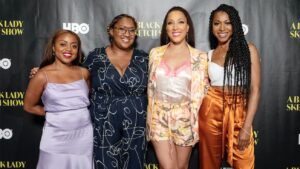
BlackFilm: How did you assemble and select the core cast of comedians and actresses who are showcased on the series? There are some actors prior to the show who are comedians that people weren’t familiar with. You have an actress in the cast who is known for her more dramatic work. She played Whitney Houston and she was on Luke Cage. But people weren’t familiar with her comedic chops. How did you decide on the core group of talent that you have on the series?
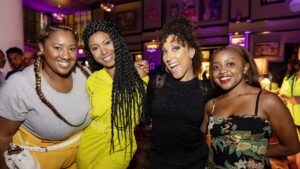
Robin Thede: I’m friends with all of them. I sent them a text and they all said yes. It was very easy…That’s essentially what happened. I knew Gabrielle Dennis two decades ago in Hollywood as a stand up comedian and as a sketch comedian. She was on Damon Wayans sketch show on Showtime years back. When she was a tiny baby in this business. I knew her only as a comedian. It was weird for me when I started seeing her do drama. I was like holy shit! She’s really good at drama! But I knew her as this incredible comedian. Sketch and stand up. I know it’s weird for the audience but it wasn’t weird for me. Because that’s how I knew her. We’ve been friends for years. Quinta, I met her when she came on The Nightly Show. I met her when I was head writer and correspondent there. Ashley Nicole Black I’ve known for years. She worked at Second City as I did.

We knew each other at late night, obviously in New York. I just knew them all and knew how talented they were. I knew what they were capable of. And that’s the cool thing about creating the show. Is I can go… I know what they can do. And I’m just going to put them on the show. Versus other sketch shows or whatever. Comedies might not know where to find Black women because they’re just not honestly trying hard enough. I mean or they’re not in the right circles. For me I live in the comedy space. So I’ve known people for a long time who have been in and out of the comedy game. So I think especially for Gabrielle it was a really fun turn to have somebody, who was known more recently for something else. But who I knew had so much comedic ability. The same with Ashley Nicole Black. Ashley Nicole Black was on a political show. But she is a sketch comedian through and through. She didn’t get a chance to showcase that the way she does on this show. And Quinta everybody knows is funny. I still don’t think people really knew what Quinta could do character wise. So I think it was refreshing for everybody to see that for all four of us. I think some people from recent history think that I was only a late night host or whatever. I’ve been doing sketch for years. I think it was kind of a bit of a little rebranding for all of us.

BlackFilm: You are a comedian but you are also an artist. How would you define the fact that you are able to showcase your talent as an artist? How important is it for you to be considered an artist as well as a comedienne?
Robin Thede: That’s nice. I don’t know if I think of myself as an artist. Wow. That’s a question that I’ve never had. I’m an artist in a way that I have something to say and I have a strong point of view. And I really believe that there are many other Black women who have different points of view from me. I think it’s important that we all get a chance to showcase that. This show wasn’t just sketches Robin loves. It’s sketches that our writers and producers thought were important to show the breadth of what Black women can do. I think as an artist it’s more of an altruistic reason why I do things. Because I’m constantly looking for ways to kick open the door and build our own table —as opposed to getting a seat at the table or whatever. I’m always looking for ways to create more opportunities for people like me, so that it’s just easier for all of us. When we want to create.
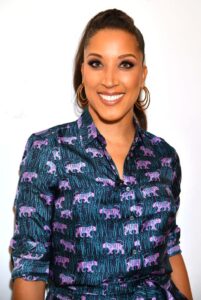
That we can create without restriction. That’s a really cool thing to hear actually —that I’m not just a comedian. I’m an artist. Because I guess it is that. I just don’t think about it that way. I guess if someone asked me if I was an artist. I would say yes, but as the showrunner of the show, the executive producer and the writer. There’s art to be made in all sorts of ways even behind the scenes. Not just the writing, but also with the shaping of the show and demanding that the show looks cinematic. And working with a really visionary director like Dime Davis to create the foundation of this first season with hopes obviously that there will be a second one. Creating the tone of something that is different than anything else out there in the landscape.
BlackFilm: Dime Davis directed the series. What types of conversations did you have with Dime regarding establishing the look and the continuity from certain sketches? Or maintaining the comedic tone that you set in the writer’s room when you are bringing the whole series to fruition?
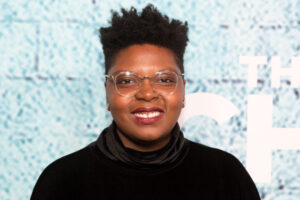
Robin Thede: She came on when it was pretty much already written. Our conversations are really in-depth about how we make each one of these 40 or 50 sketches look different but unique. Each sketch has about 40 or 50 styles part and parcel on the same show. That’s a very large task to be able to set that look. It’s one thing to make one thing look like a noir thriller and make something else look like a big budget musical and still feel part and parcel the same show. Her and I have long conversations about the cinematic look of the show. But also creating these grounded narratives. These grounded characters that live in a world that has elements of a magical reality. Allowing the actors to find their characters in this space in which they are being presented. But also showing that on screen in a way that’s organic to these characters and finding angles and lighting and production design. Working with our production design team to really create this world and a singular universe, where essentially only these four Black women live—and everyone else is just kind of visiting.
BlackFilm: How important has mentorship been for your career? Larry Wilmore, he helped launch Issa Rae with establishing Insecure after her successful web series. You had your late night show. You’ve been writing for a lot of other talented people in the industry. How important have interactions you have had in the comedic world been to your career?
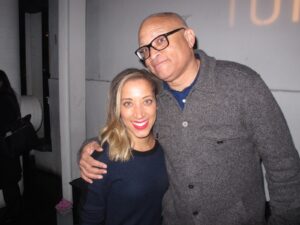
Robin Thede: It’s really important. Chris Rock executive produced my late night show. Larry Wilmore obviously was a massive, they all continue to be —Jon Stewart, Larry Wilmore, Chris Rock all continue to be mentors for me. And people I can go to when you are the EP and showrunner of a show as I was on my late night show. And as I am on this show. There is no one else to ask answers to. You’re the boss. When you have a question, you have to go to the mentors. There have only been a few people in the business who have done what I’m doing. Wanda Sykes has also been amazing. There are lots of folks who have reached out and taken me under their wing at different points in my career to help me get to that next level. It’s invaluable but it always happened organically. It happened if they came to me or it happened if I worked for them and proved that I could do it. So many people come to me and they say I want to be a part of your tribe or I want you to mentor me. I’ve never gotten mentors by asking. I’ve gotten mentors by them giving me that gift. I think it is really important that people organically allow their mentors to find them. I think that is when you get the most out of it. Because it is people who have invested in you and want to see you do well. As opposed to people that you’re tracking down.
BlackFilm: I know there is a lot of talent that have come out of the show.
Robin Thede: I think a show like mine provides opportunities, where there aren’t opportunities elsewhere for Black women. That’s the way we pitched it to a lot of these women. For the record, we asked, Tracee Ellis Ross, Regina Hall, Tiffany Haddish, it was just a scheduling thing because we shot the show so fast. They’ve all shown love on social media. They’ve sent messages to me and Issa. They all support the show. They all would have been a part of it, schedules permitting. There’ll be a Season 2 and we can get them involved. The fact remains we reached out to them immediately and asked them to be a part of the show. Because we know that they haven’t had those opportunities. Whether it be SNL or other things. There are so many movies and other tv comedic things that Black women are left out of across the board. It just means that we aren’t the first folks to ask when it comes to sketch comedy. I think that’s silly. I think we want to help change that.
BlackFilm: What types of conversations did you have to decide to include the Michael Jackson and R. Kelly current events and the controversies surrounding them in the show?
Robin Thede: I was just using them as examples that the fact that we did cover things that are still currently in the zeitgeist, but for us they’re jokes. They’re conversations we just wanted the interstitials to feel like conversations that Black women would be having. At the end of the day we’re not going to delve into them deeply like you would on The View or something. Because it’s a sketch comedy show, I was just only pointing that out. Not that it is a cornerstone of the show. I was just pointing that out to say the show was not completely evergreen. There are a lot of things that are more current. For us it was just important for us to have conversations that Black women would be having. That feels like a topic that a lot of us talk about. We want to be as relevant as we can and feel authentic. With a name like “A Black Lady Sketch Show.” It needs to feel like Black ladies are having conversations. That was the aim in bringing whatever topics we do include.
BlackFilm: What advice would you give to someone who wants to pursue a career as a comedienne or a showrunner? As a Black woman what is your experience in the writer’s room?
Robin Thede: My career is very unique, because there aren’t a lot of people who do all the things I do. It’s very rare to have someone who stars in a show who is also the showrunner, who is also the writer and also the creator. I can’t honestly name…I guess Keenan Ivory Wayans. I don’t know if I can think of another one. So advice if you want to be a showrunner, is you have to start learning all the aspects of production. Because you have to know what every department does. But that is not what you become instantly in the business. You have to work for many years before you can do that usually. To become a writer, I think you just have to figure out what your point of view is and start writing. That’s the only way to be a writer is to start writing. To be a comedian if you want to be an improv and sketch comedian you have to study at Second City, Groundlings, and UCB. You have to start learning those skills. I know a lot of Black people would rather do stand up. And that’s a great way to do it too. I just think that you’ve got to do whatever comedy feels comfortable for you. The biggest thing is to just get out and start doing it. You can’t be afraid to try whatever market you are in. You just have to just start doing it. I think the common denominator and the cornerstone for all of it, is you really need to learn how to write. Even if you just want to be a performer. It’s really crucial to doing material that makes sense to your brand. I really became a writer because no one really knew how to write for me. They didn’t know how to write for my point of view. So I was like who better to write for me than me. So, I started learning how to write and all that kind of took shape. You don’t become a creator, producer, showrunner overnight. It’s kind of like four careers in one. You just work really hard at everything. Just know that no one is going to hand you anything. The harder you work the more people recognize your skills. Luck and opportunity and preparation meet at the same time you can live your dream.
A Black Lady Sketch Show airs Fridays at 11p.m. on HBO. Robin Thede will next appear in the upcoming thriller feature Bad Hair from Dear White People director, creator and showrunner Justin Simien.


Loading…