
Silly dance fails and challenges are what initially drives viewers, both young and old to the Chinese video-sharing app TikTok. The app was the most downloaded of 2021 and is the fastest growing social media platform of all time with 3 billion-plus monthly active users (backlinko.com). Today it is only second in downloads to Meta’s Instagram. Filmmaker Shalini Kantayya’s documentary “TikTok, Boom” made its debut in the U.S. Documentary Competition at the 2022 Sundance Film Festival. The film is TikTok explained in layman’s terms. It examines the history-making, addictive app and its problematic hold on Gen Z’ers worldwide.
Gen Z is the first generation to grow up in the age of social media, giving rise to the first generation of social media influencers. With 1/3 of its audience under the age of 14, TikTok has learned how to target young people with precision. Using a machine learning recommendation algorithm, the app is built to watch you as you watch content on the platform. It watches how you react to each piece of content even using changes in facial expression among other criteria. It “learns” from these reactions and uses that data to fine-tune which videos it shows or recommends to you. Most social media apps use similar technology, but none as precise as TikTok. It basically makes a fingerprint of your taste and then presents you with very personalized videos tailored to that taste on its “For You” page.
About TikTok’s fingerprinting technology, Reddit CEO Steve Huffman likened it to “spyware” in 2020, saying: “I look at that app as so fundamentally parasitic, that it’s always listening. The fingerprinting technology they use is truly terrifying….”
TikTok knows more about what you like than you do. They know what you want before you know you want it. They have amassed a staggering amount of profile data about you since the first day you downloaded the app. So, if you’re 14, that’s almost all of your life. And what does Beijing–owned TikTok and parent company Byte Dance do with all of this very personal data about you? They sell it, of course. Data is King. Data is the new oil and China is the new Saudi Arabia.
Brands use this information to pinpoint ads with precision. The platform attracts 2 billion eyeballs per month and brands are drooling to get some of those eyeballs trained on them, amounting to nearly $4 billion in ad sales dollars for Byte Dance in 2021 (emarketer.com). But brands and TikTok aren’t the only ones making money. Content creators and influencers with a following are also bringing in some cash.
“TikTok, Boom” introduces us to three of its digital natives – the new term for young people who have never known a world without social media –and explores what life is like for them. Feroza Aziz, Spencer “Spencer X” Polanco and Deja Foxx are TikTok’ers who are all earning money on the app, but 2 are also using the platform to raise awareness for social issues close to their heart.
New Yorker and self-taught beatboxer “Spencer X” Polanco, was the 8th most followed person on the platform (according to dexerto.com) in summer 2021. Polanco, 29, is Ecuadorian and Chinese and was penniless, couch-surfing and performing on street corners and his YouTube channel when a performance on TikTok went viral and allowed him to monetize his page. Nickelodeon, HBO, Sketchers, Chips Ahoy, Oreos and Sony have since sponsored him, and he is now making a real living from the app.
Feroza Aziz, an Afghan-American teen from New Jersey, discovered a community of Afghani teens on TikTok after a video of herself dancing in a traditional Afghan dress made by her mom, gained thousands of views. Since then she has used her platform to raise awareness of Muslim genocide and concentration camps in China. Her first video, posted in 2019 when she was 17, was disguised as a makeup tutorial and saw more than 1.6 million views before being taken down by the Chinese platform. She continues to be outspoken about Muslim genocide on TikTok telling the “BBC News,” “I’m not scared of TikTok,” regarding her suspension and subsequent ban from TikTok. She says she will continue to spread awareness about Afghan and Kashmir issues as well as the unfair treatment of immigrants by ICE in America, and more.
Deja Foxx, from Tucson, Arizona, is an activist and influencer making money on the platform with sexy images of herself while also using the app to support Planned Parenthood, pro-choice as well as raise awareness of online violence, cyber harassment, hate speech, and more. She was hired by Kamala Harris and is the first influencer ever tapped to join the staff of a vice presidential campaign. In the documentary she says: “[TikTok] is where I gain financial stability. That gives me a lot of freedom in life, but it’s also where I endure some of the most intense harassment and abuse.” She likens the platform to an abusive relationship.
Deja Foxx’s complaints have been echoed by many influencers who complain that life as a social media influencer may seem glamorous and fun, but opens you up to hate. It is not for the thin-skinned. Influencers compare it to a hamster trapped on a wheel constantly chasing likes, follows and views. Many influencers suffer from depression, loneliness and burnout.
In dissecting one of the most influential platforms of the contemporary social media landscape, “TikTok, Boom” also breaks down how the platform reinforces social disparities. The algorithm feeds your interests and also keeps people with different views apart. You will likely never “meet” anyone with different values on TikTok, since the algorithm will only show you videos about things you are interested in. If your views are democratic, you’ll rarely see a video with a republican point of view, or if you are a white supremacist, you will never see a video about Black Lives Matter, etc. It further reinforces your views and further alienates and polarizes people. Causing our young people to live inside an unrealistic cyber bubble, never experiencing opposing ideas.
A follow up to her 2020 Sundance Film Festival offering, “Coded Bias,” Kantayya continues her work examining the space where technology meets, amplifies, and opposes our humanity. This incisive look at the power and complexities of technology is meant to advance the conversation and hopefully lead to tightened data privacy and security measures especially for TikTok’ers under 15. We also hope to see some sensible and responsible regulation to end hate speech, cyber bullying and harassment on all social media platforms.
Meet the Artist
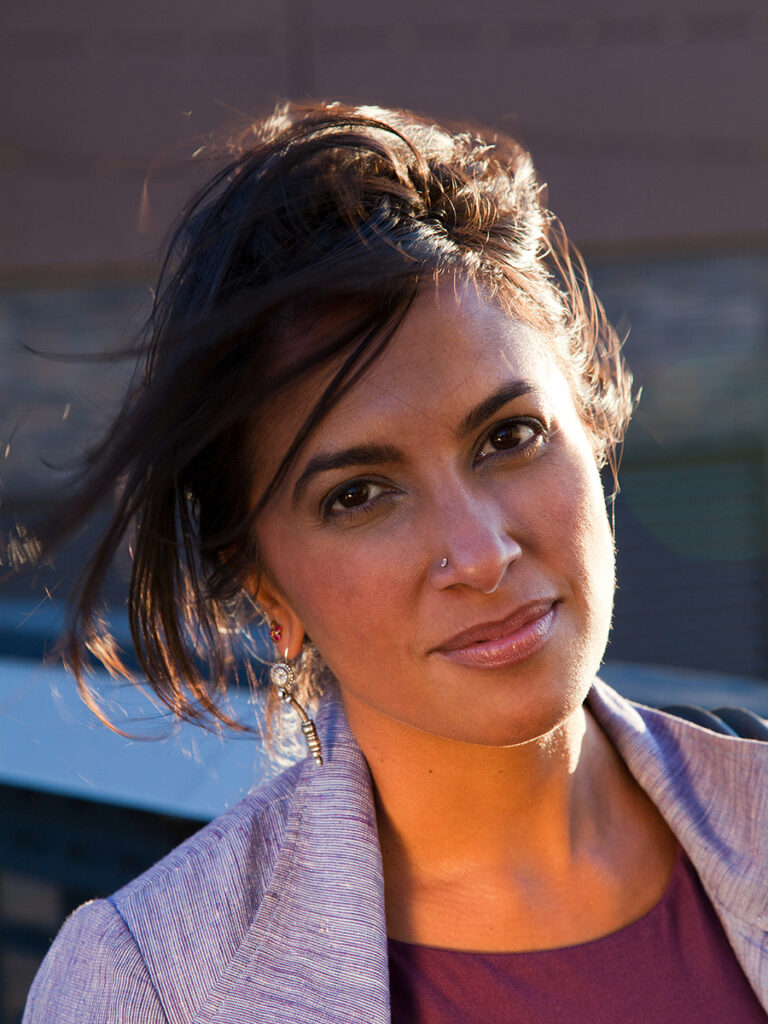
Shalini Kantayya’s “Coded Bias”premiered at the 2020 Sundance Film Festival to critical acclaim and now streams on Netflix. Kantayya’s debut feature, “Catching the Sun,” premiered at the LA Film Festival and was named a New York Times Critics’ Pick.
She is a TED Fellow, a William J. Fulbright Scholar, and an associate of the UC Berkeley Graduate School of Journalism.
Credits
- Director: Shalini Kantayya
- Producer: Ross M. Dinerstein, Shalini Kantayya, Danni Mynard
- Executive Producer: Ross Girard, Rebecca Evans, Travis Collins, Randall Lane, Michael Cho, Mimi Rode, Tim Lee, William Rosenfeld, Robert Kapp
- Director Of Photography: Steve Acevedo
- Editor: Seth Anderson
- Composer: Katya Mihailova
- Co-Producer: David Tomlin
- Run time: 90 min



Loading…