

Currently showing in Toronto is Poet of Relation: The Essential Euzhan Palcy, a spotlight on the Martinique-born filmmaker who became the first Black woman to direct a major Hollywood production with the hard-hitting apartheid drama A Dry White Season.
The retrospective is part of the TIFF Cinematheque programming and taking place at TIFF Bell Lightbox from Oct. 3 to Oct. 9.
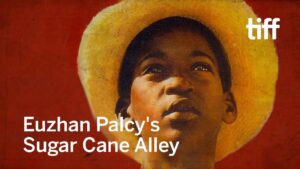
Among her films being showcased are Sugar Cane Alley (the film’s English-release title), which won the first-ever Audience Award at the 1985 edition of FESPACO (Burkina Faso’s festival of pan-African cinema), as well as the Best First Film prize at the César Awards and a Silver Lion at the Venice Film Festival — the first time either of these awards was ever bestowed on a Black director.
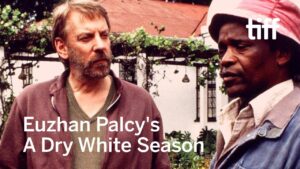
Her 1989 follow-up A Dry White Season, set during apartheid-era South Africa starred Donald Sutherland, Susan Sarandon, and Marlon Brando. Released by MGM, Palcy the first Black woman to ever direct a Hollywood studio feature.
Blackfilm.com spoke exclusively with Palcy about the 30th anniversary of A Dry White Season, which had its world premiere at TIFF in September 1989 and was reshown again on the same day last month.

When did the folks at TIFF call you and say they wanted to play your film again to celebrate its 30th anniversary?
Euzhan Palcy: Well, the film had premiered here at Toronto on Sept. 10, 30 years ago. It’s a great thing that people got to see it again.
It was the first film you did for a studio. If you look back now knowing what you know, would you want to do anything different?
Euzhan Palcy: Regarding that film, of course. What I would have done is shoot directly in South Africa. That’s the only thing that I would change because I shot the film in Zimbabwe. Zimbabwe was just next door, but it was around apartheid for many years. It was Rhodesia, remember that? The locations are the same. I had African American actors to portrayed the South African actors.
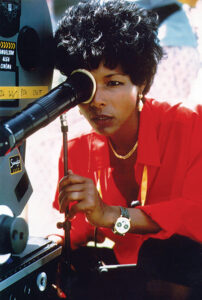
I fought hard for that, to be able to make the movies that I really wanted to make, because I’m the kind of filmmaker who believed that, if you do a committee, you do official piece, you do things like that, you can do whatever you want. But when you deal with history, you have to get it right. Because you can not go back and what you put on the screen will stay. And people, generation and generation will go by that because you made a movie, based on the situation at a time where you were a witness. So they trust you as a witness who made that movie. So that’s why, when I deal with history, I really want to get each right.
It’s been 30 years, but you haven’t had a lot of projects.
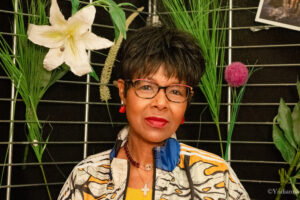
Euzhan Palcy: The problem that I had was who I am, that means the choices that I will make a movie. All of the studios, Disney, Warner brother or Fox, and MGM who work with me will confirm that. I’m a very easy person to work with. People have a lot of fun working with me, my team and everybody. The crew can say that. But the problem with that is they wanted me to work with them. I said no. I didn’t want to go to Hollywood. Thanks to Robert Redford, who put me on a plane and sent me to Hollywood. God bless his heart. I went to Hollywood and made A Dry White Season. They were happy with the results but it was because it was their story not mine. That was my problem, the biggest problem. “We want your talent. We love that. Give it to us to apply to our stories. Your stories? Keep them in the bag. We are not interested in those stories, because your stories are not bankable.” When you hear that over and over and they say, “this is such a great stories, but we won’t know how to market it. We won’t know how to sell it to the audience.” That was hard for me. Maybe because I’m Caribbean. Maybe if I was African American, I would say, “okay, let me do your stuff.” Then I would have a chance to make one of my stories. But I couldn’t.
In the last few years, there has been a number of female filmmakers and screenwriters getting attention and their films distributed. Can you say that the doors are opening wider?
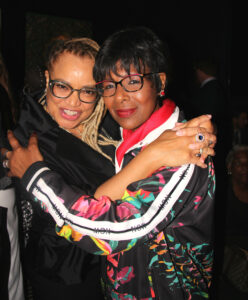
Euzhan Palcy: Well, the door hasn’t been that open for many women that easily. You could ask the same question to Kasi Lemmons, who came after me. She couldn’t get her project made. Ask Julie Dash. They are there and they have a lot of projects. It was the same problem. With social media it’s different because you have a new generation of filmmakers. They’re younger and we paved the way for them and they know that. Because there is a social media, trust me, if I had what exists today with the tools I could film my stories, I would put them on the net, and I would do it that way.
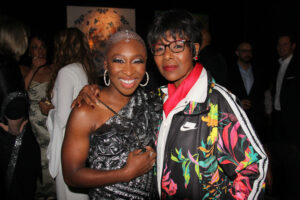
I have been very present in not on the screen, but on people’s lives. I train young people in Africa, in the Caribbean, in France. And even here, help them with their screenplay, train them. I keep talking to people, and have done a lot of writing. I have six, six stories that are on the table. So I didn’t stay like that doing nothing. No, I was just waiting for the right moment to strike. And it is now for me. That’s why I said okay. You have other movements such as Me Too movement, you have the Times Up movement, you have all is also the change at the Academy. I’m a member of the Academy. Yes, all this is important. And that happened two years ago, because they sent home for this white male, who was very sexist and racist. Look what is happening today, there is a change. I’m feel too old because there are some young filmmakers who could be my daughters, or my little sisters or what our brothers as well, that I feel like “okay, no, I’m here.” I have the flame and it’s still there? I couldn’t get people to say yes to my movies, because they are big movies, they are not small things very easy to do that you consider okay with $5 million dollars.



Loading…