Celebrating ‘She’s Gotta Have It’ 25 Years LaterAn Interview with Tommy Redmond Hicks
By Wilson Morales
August 8, 2011
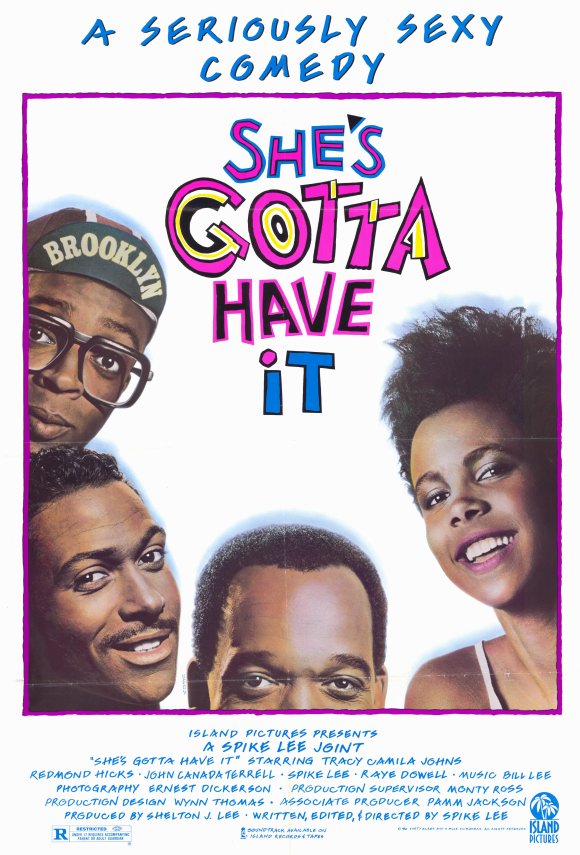
Today marks the 25th anniversary of when Spike Lee’s debut film, ‘She’s Gotta Have It,’ hit theaters on August 8, 1986.
At a time when there were less black films in theaters and only a few notable actors (Whoopi Goldberg, Eddie Murphy) marking their place in Hollywood, there also weren’t that many black filmmakers ready to change or challenge the industry.
Then came Spike Lee. This NYU graduate, having done the short film ‘Joe’s Bed-Stuy Barbershop’ as a warm-up, shot his first feature film in 12 days in Brooklyn with just $20,000. Its final budget ballooned to $175,000.

The story centered on Nola Darling (played by Tracy Camilla Johns), a young, African-American sexually charged independent woman from Brooklyn whose daily life is spent around shuffling back and forth between three men. There’s the good old-fashion guy Jamie Overstreet (played by Tommy Redmond Hicks), the model Greer Childs (John Canada Terrell), and Spike’s Mars Blackmon, the Nike-wearing bike messenger.
Met with favorable reviews from The New York Times and other leading newspapers, the film went on to gross more than $7 million at the box office. Prior to its theatrical opening, the film had won the Prix de Jeunesse at the Cannes Film Festival.
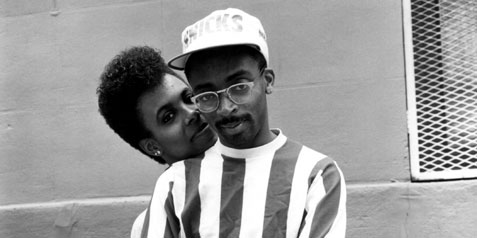
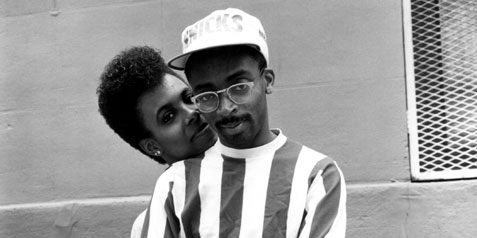
Spike Lee, who won Best First Feature at the 1987 Independent Spirit Awards, went on to do more classic films such as ‘School Daze,’ ‘Do The Right Thing,’ ‘Malcolm X,’ and countless others. He recently completed production on his latest 40 Acres and a Mule film, ‘Red Hook Summer,’ and will direct the remake of Park Chan-wook’s 2003 film ‘Oldboy.’
After numerous efforts to locate her, Tracy Camilla Johns simply can’t be found. After this film, she was featured in a smaller role in Mario Van Peebles’ ‘New Jack City’ and has not been seen since.
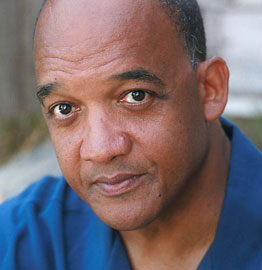
Blackfilm.com caught up with cast member Tommy Redmond Hicks as he spoke about his role in this cult classic and his life afterwards.
25 years later, do you remember how you landed the part opposite Spike Lee and Tracy Camilla Johns?
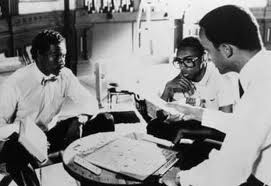
Tommy Hicks: I got the part because I had done ‘Joe’s Bed-Stuy Barbershop,’ which was Spike’s Master Thesis, five years before. It won the student Academy Award and I got great reviews for playing the ‘polished’ gangster, “Nicholas Lovejoy. Then Spike wrote SHE’S GOTTA HAVE IT for me. I met Spike when I auditioned for “JOE’S” at the suggestion of actress Donna Bailey, who I was dating at the time. She had won the female lead in “JOE’S.”
Thinking back, how would you describe the character you played?
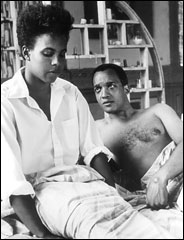
Tommy Hicks: The character of “Jamie Overstreet” was very difficult to play. He was not hip and he was not a Ladies man, but he was not a complete ‘square’ either. He was an ordinary guy wanting basically an ordinary relationship. But he was rather open minded and had a great sense of himself. He was an educator, being a school teacher, who was also a bit of a romantic. But getting the psychological ‘handle’ on the character took some doing. I was not like the character.
What sort of feedback did you get once the film came out?
Tommy Hicks: I got incredible feedback. My performance was singled out for praise in all the media reviews.
What did you see in Spike Lee as an actor and rising director from Joe’s Bed-Stuy and this film?
Tommy Hicks: I saw nothing in him as an actor. He was not an actor. He was intelligent and creative, and he knew what he wanted. He was becoming a filmmaker. He had focus, drive, and a certain view of things in the world. He was also very open to your ideas, and very collaborative at the time. We had a great working relationship and had become very good friends. We both were big Movie fans and we both seriously studied and talked about films.

Back then, did you think he would change the Hollywood game in terms of black cinema?
Tommy Hicks: It was not a question of him changing the “Hollywood game” at the time. SHE’S GOTTA HAVE IT was a film he made to simply “put us on the map” towards having careers in this business. It was written as a commercial venture. Pure collaborative talent and drive enabled it to become something special, and something else. Spike and I were both aspiring towards a certain creative artistry even while recognizing the commercial aspect as a necessary reality. The fact that the film became both a commercial and Artistic success was a result of our feelings about a certain ‘standard’ we believed the film should have. We definitely did not want it to be a “blackploitation” venture. As a result, SHE’S GOTTA HAVE IT showed the world that there was an audience for non-stereotypical Black characters, and non-stereotypical African American stories. It was a film more about genuine psychological character thought rather than action, as it portrayed young black characters beyond the social stereotypes we were accustomed to seeing in feature films.
What did you do after the film? Did it lead to more roles?
Tommy Hicks: Yes, it led to more roles. But definitely not enough.

Over the years, we hadn’t seen much of you on the screen. What have you been up to?
Tommy Hicks: I have been doing some TV dramas and sitcoms, TV commercials, and have written commissioned feature film screenplays. I am most proud of having acted in four of the films of great African American filmmaker, Charles Burnett, in which he wrote a couple of the lead roles specifically for me, just as Spike did with SHE’S GOTTA HAVE IT. I am also still acting onstage, and have been dramaturging and directing stage plays here in Los Angeles, one of which, CHAMPION, was brought to New York City for a critically acclaimed off off broadway run. I have also recently written a feature film screenplay which I plan to direct.

Do you still keep in touch with Tracy, Spike or any other cast or crew member?
Tommy Hicks: No, I don’t. I don’t even know where Tracy is.
What was your favorite scene in the film?
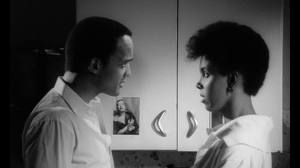
Tommy Hicks: My favorite scene was the ‘breaking up’ scene between my character’s and Tracy’s in the kitchen.
If anyone were to ask you about ‘She’s Gotta Have It,’ how would you sell it to them?
Tommy Hicks: I would not “sell it.” I would simply tell anyone, if they wanted to see an interesting, funny, and different kind of independent film, made with a pure collaborative effort, then try to see SHE’S GOTTA HAVE IT. I do not think you would be disappointed.