

Opening in theaters today nationwide via Gathr Films’ Theatrical-On-Demand is the coming-of-age, award-winning feature drama SPRINTER
Executive produced by Jada Pinkett Smith and Will Smith, SPRINTER is a coming-of-age drama highlighting every-day Jamaican culture that is rarely seen on film. Winner of the Best Feature Film, Best Director, and Audience Award at 2018’s American Black Film Festival, and Jury Winner for Best Narrative Feature at the 2019 Pan African Film Festival.
Written and directed by Storm Saulter (Better Mus’ Come), SPRINTER stars newcomer Dale Elliott, Kadeem Wilson, Dennis Titus, Shantol Jackson, Bryshere Y. Gray, with Lorraine Toussaint, and David Alan Grier.

The film follows17-year-old Akeem Sharp (newcomer Dale Elliott), nicknamed the Rasta Rocket for his once-in-a-generation speed, who is set to be Jamaica’s next big track-and-field sensation. Akeem hopes his rise in athletics will take him to the U.S. for the World Youth Championships in Los Angeles and reunite him with his mother, who has supported the family while living as an illegal resident for over a decade.

But Akeem’s rising star is weighed down by turmoil at home: a volatile father, and an unruly older brother who insinuates himself into Akeem’s career as a means of escaping – or perhaps enhancing – his scam artist hustle.
SPRINTER was produced by Robert Maylor of Mental Telepathy Pictures, Clarence Hammond, and Jamal Watson, with Jada and Will Smith as Executive Producers, along with NBA Veteran and Media Personality Richard Jefferson, Josef Bogdanovich, Zachary Harding, Dr. Lim Dong Pyo, and Flipp Montgomery.
Blackfilm.com recently caught up with Saulter and Jefferson as they discussed their reasons behind creating this film and getting its universal message across to everyone.
Can you talk about the creation of this film?
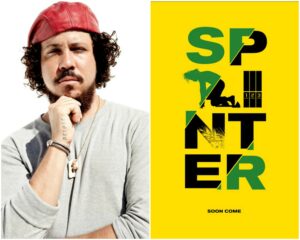
Storm Saulter: A few thing came together to make this happen. From a story perspective, I wanted to tell a story of Jamaican track and field. I wanted to tell a story of a young boy making that transition to a young adult in that very important moment in their life. I also wanted to tell a story of young boy trying to get into the life of his mother. At the time I was dealing with those issues because I had lost my mother. She had passed and I was grappling with those feelings myself. What if I could create a character of someone who had lost his mom but if he could run fast enough, he could get to her and bring his family back together. Those were all the things that were swirling and at the same time with Usain Bolt and Shelly-Ann Fraser-Pryce and all these amazing track superstars who were dominating for a long in that period, I just felt the energy was in the air and the interest is global.
It took a while to develop and to refine it to what the pure moments are, but ultimately I wanted to tell a story about a modern Caribbean family that’s complexed and nuanced and realistic.
Did you do any research into the track and field part of the story?
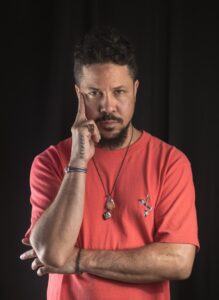
Storm Saulter: Yeah. I was always a runner in school. I didn’t pursue becoming an athlete, but I was always very fast and interested. I also started directing commercials and directing a lot of stuff for Puma and following a lot of athletes. I would shadow a number of track athletes from hurlers to relay runners. I did a lot of work directing stuff from the track world and definitely a lot of insight into their world, from what their schedules are like and what their lives are like to be that good. In school, you have kids in high school who are running a second slower than Usain Bolt in the 100 meters. Your success depends on your ability to focus and be in mentally.
How did you get involved with this?
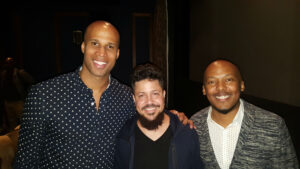
Richard Jefferson: Robert Maylor has been a good of mine and we have known each other since we were both in college. It was just really watching his growth and the things he’s done and the lessons he learned. When you are working with friends, you’re always saying, “Let me know what you have going on next.” He and I started talking about the type of films he wanted to make, cultural films and things that will go in depth. Not only into the African American culture but Caribbean culture and how they all blend together.

This story resonated with me because in America, it’s lower, social economical opportunities for people who are really about football and basketball. In Spanish speaking countries, it’s baseball and in Jamaica, it’s sprinting. Then you have immigrant element and overstaying Visas. These are things that impact the culture and it couldn’t be more relevant than it is today. Three years ago, we were first discussing this. That’s how I got involved. One, because of the relationship with Rob and him knowing Storm and the stories they wanted to tell.
With other NBA players who have been producing or exec producing films, did you go to any of them and ask for advice about investing in films?

Richard Jefferson: This was a relationship that has been built for 20 years between Rob and I. With him still sleep in my couch when he just graduated from Princeton and us hanging out and building a friendship and understanding who he was. This was never a goal of mine. It was a goal to support someone who I believed in. It’s both of us wanting to send the same message to the world. I’m not trying to enter into the movie business. I’m not trying to enter the entertainment side from that standpoint. What I’m trying to do is support a friend that I believe in and we have a similar message. If he wants to tell a story in movies in a form I believe in, those are the best type of investments and opportunities you can get involved in.
Can you talk about putting this cast together?

Storm Saulter: I knew I would put together a cast of fresh, great Jamaican screen talent but there were actors like Kadeem Wilson, who plays the older brother in the film. I’ve been wanting to work with him for a long time. Shantol Jackson, who plays Kerry, is another super talent who gets work on the stage and I just knew I wanted to give them characters that they can bite into.

I already had my eye on a number of Jamaican actors and I knew there were some roles for international talent we could find places but for the lead, it had to be someone who can play a high school kid and someone who ran track. We can’t take an actor and train you for two months and put you out there. You’re not going to look like an athlete. You have to have form and it has to be built in.

It was a mix of finding strong fresh talent who can embody these characters and give new Jamaican talent something they can bite into and finding the lead who can carry the film. It was a rick because it was Dale’s first film. He so embodies the character. His real like is similar and parallels the character he’s playing. There’s a certain amount of truth that he brings to this role. Any time I can show a new actor for the first time, I want to take that.

How did Will and Jada Pickett Smith and their production company Overbrook get involved?
Storm Saulter: It was a convergence of a few things. Rob Maylor was a key and he had developed a relationship with Overbrook, doing work with them. I believe Overbrook and their principals were also at a moment where they decided they wanted to put their energy and weight in emerging voices and new voices in cinema. The script got to a point where it was solidIt always comes back to that. They also saw that Usain Bolt was a part of the film and they wanted to get behind this. Rob and Richard were the first ones that were locked in and got us to a certain point that gave confidence to all the other folks that got involved, including the Smith.
Is there any part of this film that you can relate with?

Richard Jefferson: A lot. Growing up in Los Angeles, my mom moved from South Central LA in ’88 after my father struggled with drug abuse. I had an older brother, two years older than me, who got a felony for grand theft auto. Even when I was a young basketball player, people didn’t see NBA potential, but they knew there was something there. My brother was 17 and he was making decisions on my behalf and that’s what resonated with me. What would have happened if I was with brother the day of his arrest. My brother saw me play basketball when I was a sophomore in high school and the new time he saw me play was when I was junior in college. He was in prison for multiple years and he’s only a year and a half older than me. When the character Akeem is going through this, it’s decisions that you are making in your life. A number of athletes can relate to this storm in one form or another.
What’s the message behind the film?
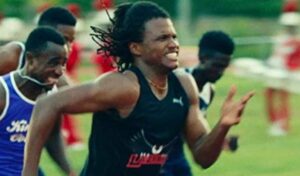
Storm Saulter: I think what this film is looking at is what family means. Is your family your biological person or is your family the person who will show up for you and be there, especially when you fall down? In this film, this young man is a bit of a pinball trying to figure who he is. He’s either being nurtured or not nurtured by various people and his definition of family changes a lot. This is about showing a nuanced, modern complex family. It’s a Jamaican family, but living on these stereotypes. It’s not rags to riches. It’s more middle of the road. The obstacles in the film are realistic. I was conscious about showing something that feels real and not rely on the extremes.



Loading…