
Blackfilm.com correspondent Ellen Wanjiru asks Colman Domingo, Glynn Turman and Michael Potts about the intense demands of their characters in MA RAINEY’S BLACK BOTTOM.
Netflix’s upcoming feature adaptation of two-time Pulitzer Prize winner August Wilson’s play by the same name, MA RAINEY’S BLACK BOTTOM, is the consummate dramatic period piece. In a roaring decade known for prosperity, jazz bands, flappers, and bathtub gin, the film does an eloquent job showing an antithetical point of view on the Black experience during that era. A view that explores the consequences of the Great Migration, particularly what was lost when Black people left the rural south for the urban north, and themes that are still relevant today, such as race, culture, faith, sexuality, music, and trauma.
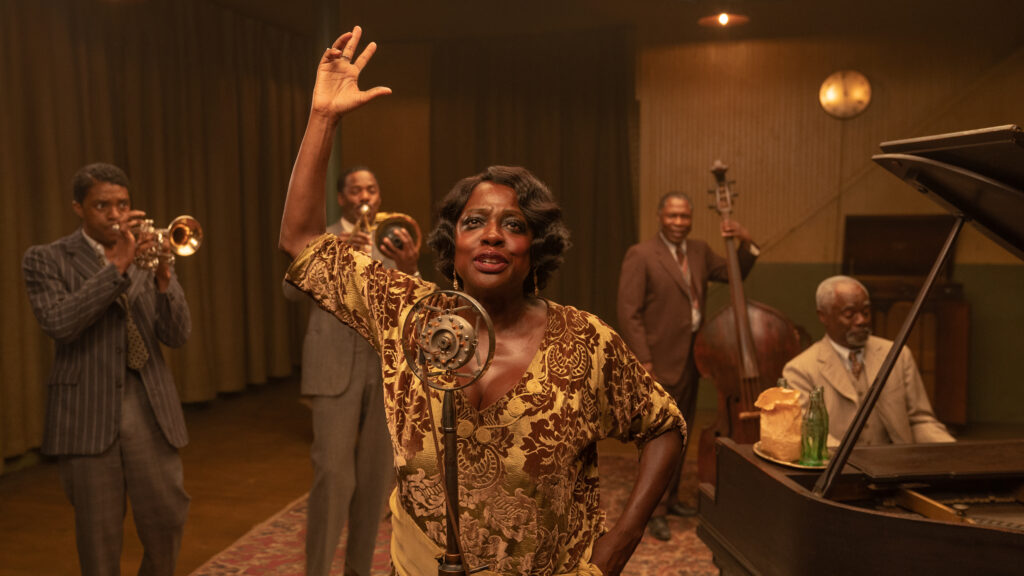
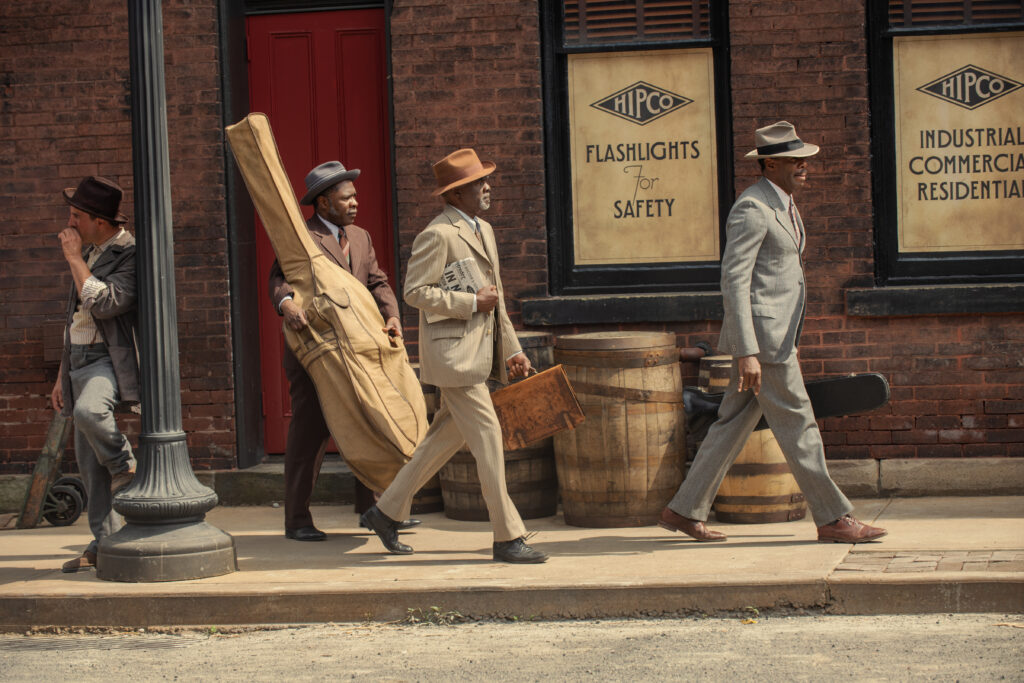
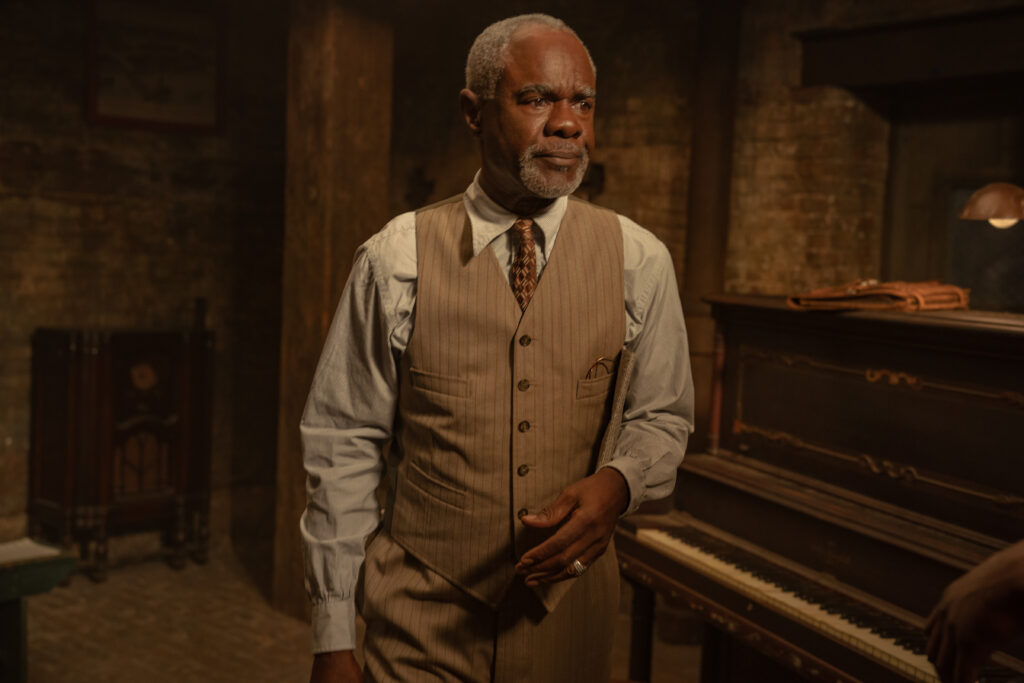
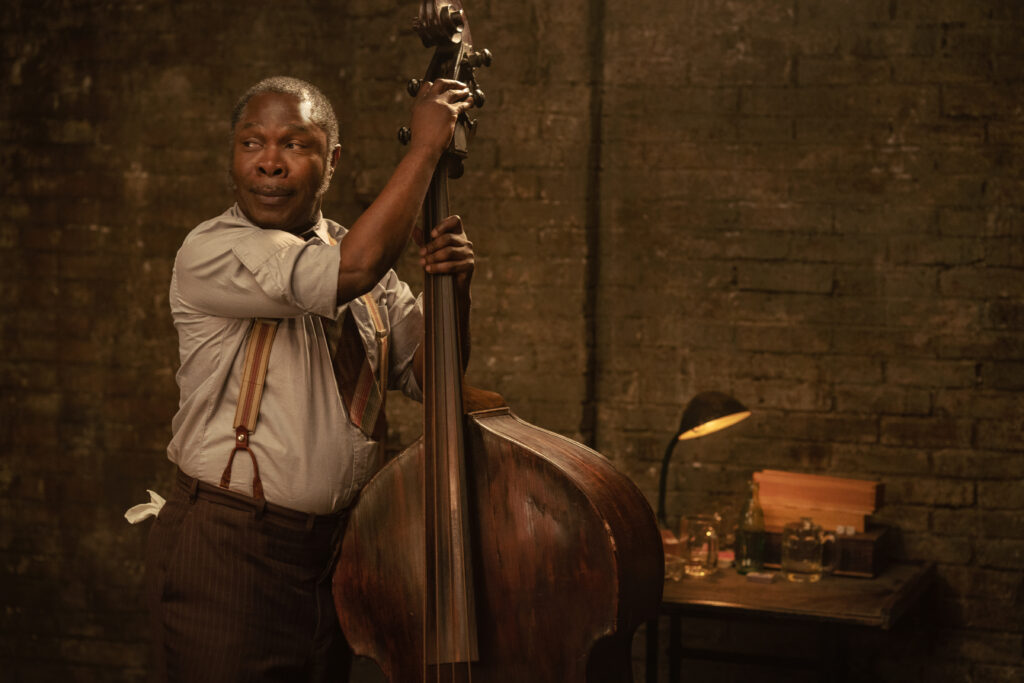
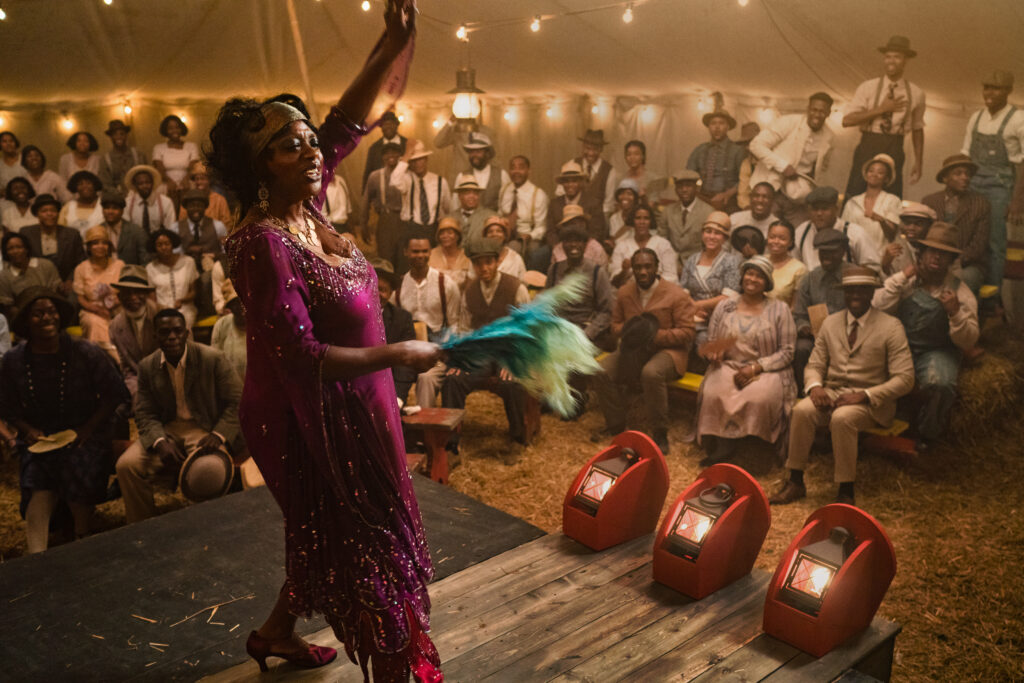
The powerhouse ensemble cast includes Academy award-winner Viola Davis who plays the proud, complicated, and talented MA RAINEY. Tony and Oliver award-winner Colman Domingo plays the level-headed trombone player Cutler. Emmy winner Glynn Turman is the sagacious piano player Toledo. Michael Potts plays the composed bassist Slow Drag. And the late and great Chadwick Boseman, with perhaps the most nuanced narrative, plays the charismatic, ambitious hot head cornet player Levee.
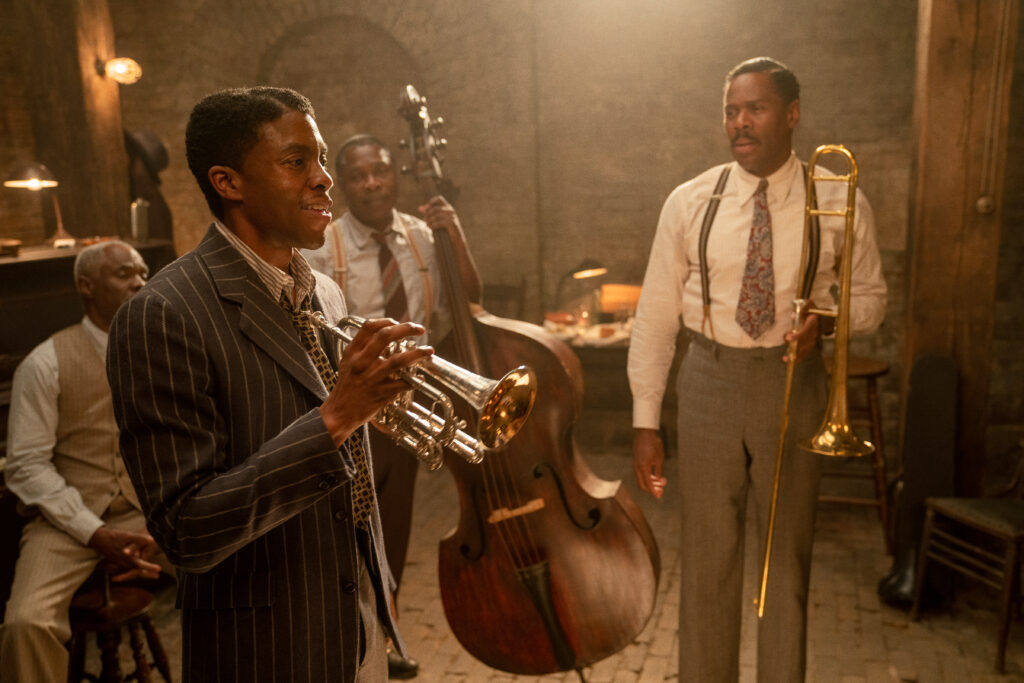
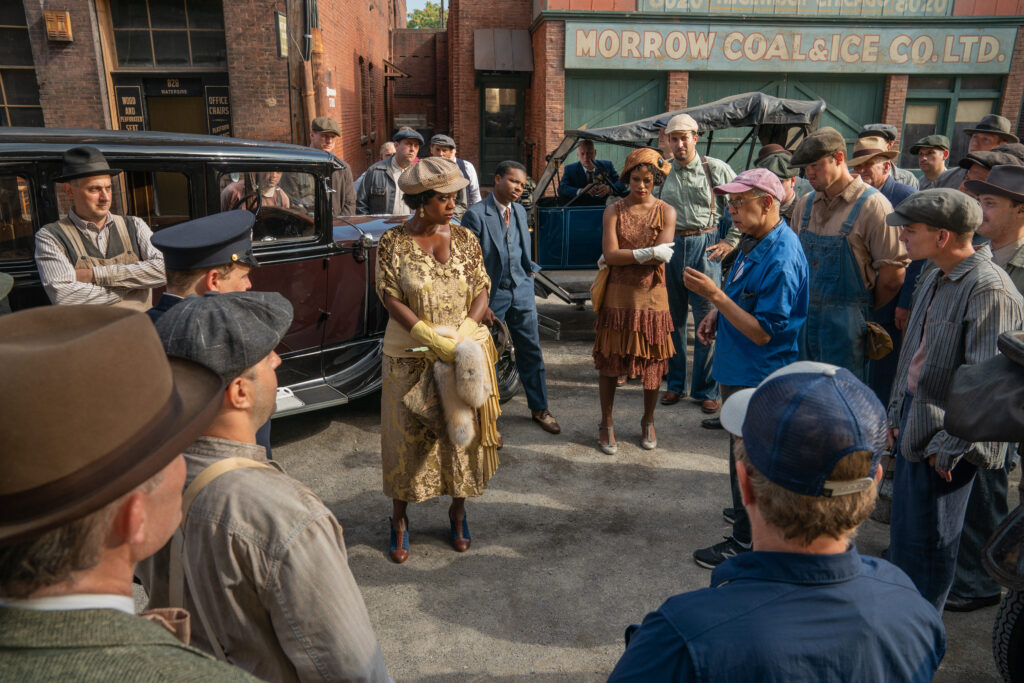
Much of the story takes place during one hot summer afternoon. Rainey has come north to Chicago to record music and has brought with her, four musicians. And it is within the studio building, which serves as the primary location, that the dialogue and temperament of the language leaps to life. The monumental, raw and explosive scenes, particularly when the band characters share their personal stories, rocked me to my core.

Viola Davis’ portrayal of the Mother of Blues is a tour de force. I walked away feeling emboldened. Chadwick Boseman’s character arc was stunning to witness, which speaks volumes of his ability to pour his entire being into a role. It’s this brand of artistic commitment that takes the viewer along for an emotional ride and drops them off transformed. It’s almost as if Boseman knew that the end was near and therefore gave the performance of his lifetime. While Davis’ and Boseman’s characters are at odds the entire time, they are both cut from the same textured fabric; both are fighting to prove themselves and be taken seriously as Black entrepreneurs.
One of my favorite and most memorable scenes (and there are a few) is Toledo’s (Glynn Turman) visual monologue of “The Leftovers” and the unfortunate reality that the Great Migration worked for some but not for all and what happens to the people who were left behind. The inclusion of the images drove the point home beautifully.
The film shines for several reasons, starting with August Wilson’s exquisite story-telling, George C. Wolfe’s vision and masterful direction, the elegance of the production design, and the ingenious cast that gave everything they had.
Synopsis: Tensions and temperatures rise over the course of an afternoon recording session in 1920s Chicago as a band of musicians await trailblazing performer, the legendary “Mother of the Blues,” Ma Rainey (Academy Award winner Viola Davis). Late to the session, the fearless, fiery Ma engages in a battle of wills with her white manager and producer over control of her music. As the band waits in the studio’s claustrophobic rehearsal room, ambitious trumpeter Levee (Chadwick Boseman) — who has an eye for Ma’s girlfriend and is determined to stake his own claim on the music industry — spurs his fellow musicians into an eruption of stories revealing truths that will forever change the course of their lives.
MA RAINEY’S BLACK BOTTOM celebrates the transformative power of the blues and the artists who refuse to let society’s prejudices dictate their worth. Directed by George C. Wolfe and adapted for the screen by Ruben Santiago-Hudson, the film is produced by Fences Oscar nominees Denzel Washington and Todd Black. Colman Domingo, Glynn Turman, Michael Potts, Taylour Paige and Dusan Brown co-star alongside Grammy winner Branford Marsalis‘ score.



15 FACTS ABOUT MA RAINEY
- Ma Rainey was born Gertrude Pridgett in 1886 in Columbus, Georgia.
- She left home as a teenager so that she could perform on the Black minstrel troupe circuit in the American South.
- She married vaudeville singer William “Pa” Rainey in 1904, which led to her changing her name to “Ma” Rainey.
- She signed with Paramount Records at the age of 38 and made her first recordings in Chicago, ultimately recording over 100 songs.
- She was one of the first African American professional blues singers and many of her songs subsequently became blues standards.
- In 1912, Rainey hired a teenage Bessie Smith as a dancer. Smith went on to become known as the “Empress of the Blues” and the two had a long friendship.
- Rainey became known as the “Mother of the Blues” and influenced not only count less blues singers like Bessie Smith, but she also had an impact on Black literature and drama from poets Langston Hughes and Sterling Allen Brown to Alice Waters, who based the character of Shug Avery in her novel “The Color Purple” on artists including Ma Rainey and Bessie Smith.
- Ma Rainey was famous for her flamboyant performing style and costuming which included wearing a necklace made of twenty gold dollar pieces.
- Louis Armstrong was a member of Rainey’s backing band.
- Rainey was well ahead of her time, recording songs such as “Prove it on Me Blues” that featured LGBTQ themes that referenced her bisexuality.
- She was inducted into both the Rock & Roll Hall of Fame and Blues Foundation Hall of Fame in 1990.
- In 1994, Ma Rainey was the honoree of a US Post commemorative stamp.
- Bob Dylan’s song “Tombstone Blues” was influenced by the blues and references Ma Rainey.
- Ma Rainey ran three theatres in Columbus, Georgia before she died.
- She died of a heart attack in Georgia in 1939.



Loading…