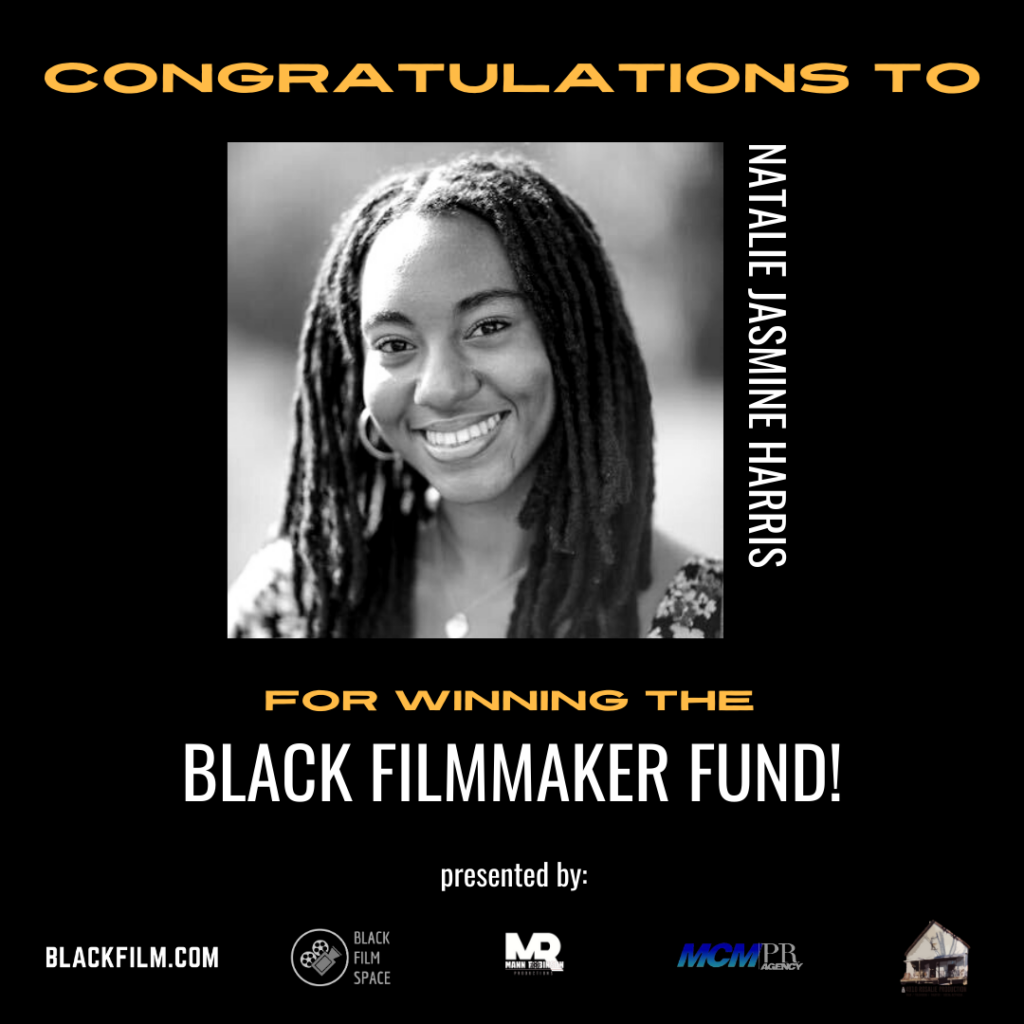
We recently sat down with Natalie Jasmine Harris, up and coming filmmaker and recipient of the 2020 Black Filmmakers and Writers Grant. The grant was established earlier this year by Blackfilm.com, Black Film Space, 4910 Rosealie Productions, Mann Robinson Productions, and Free Mind TV & Film.
The organizations started brainstorming the fund in early May with the intention of giving direct support to Black Writers and Directors during the Covid-19 pandemic. The planning resulted in two days of online screenings of short films by Black Directors and Writers that raised $2,000 dollars to be awarded to two promising filmmakers.
Harris’ film “Metamorphosis” captivated viewers with in-depth storytelling and a unique premise. The film follows a queer and inexperienced girl who seeks guidance after a game of “Never Have I Ever.” We got the opportunity to have a discussion with Harris about her work in film and plans for the future.

Where are you from, what was it like growing up there?
I was born and raised in Silver Spring, Maryland. Growing up, I spent a lot of time in New York City, which is where I went to school before the pandemic and where my mother’s family is from. I loved Maryland, but I would always say I was from New York – in part because I wanted to be like my mom, but also because New York always had my heart. I especially miss it now that I’m back in Maryland because of the pandemic.
What was it about film that drew you in?
I’ve always admired how film is such a powerful medium to share people’s stories and get messages heard. I entered film by making documentaries because I loved the role that art played within social justice movements. I knew that I wanted to contribute to that.
How did you start making films?
I first started making films during the spark of the Black Lives Matter Movement in 2015. I was in high school at the time and would often attend the protests in D.C. I’d take a little camcorder with me and just record what I saw around me. I ended up going to college in D.C. thinking I wanted to become a documentarian, but I soon realized that I had stories to tell of my own. So I decided to transfer to NYU where I could learn more about filmmaking as a whole.
How would you say your filmmaking evolved when you moved to New York?
When I went to NYU, my world opened up beyond just documentary film. I got to explore almost every genre of filmmaking and figure out what I liked most. I found my voice and got the courage to be vulnerable through my films which led me to make my films like “Metamorphosis.”
Was there a particular event or time that you recognized that filmmaking was not just a hobby, but that it would be your life and your living?
I actually never really had one of those “aha moments.” My mom works in education, and she encouraged me to try many different hobbies and career paths growing up, but filmmaking always stuck with me.
What/ Who are your major influences?
I’m heavily inspired by other coming-of-age and queer films. Directors like Andrea Arnold, Dee Rees, Desiree Akhavan, and Berry Jenkins really influence me and the work that I want to make.
After seeing Metamorphosis and some of your other work, you seem to have a very distinct point of view as a filmmaker. Where does your inspiration come from?
My inspiration mainly comes from my personal experiences, but also from me trying to reimagine what liberation can look like – especially when it comes to writing about girlhood and identity. In “Metamorphosis,” I feel like the reimagining took place regarding the friendships and family life that the main character had. Specifically, the vulnerability she possessed to share her true self with those around her. I wasn’t in that place when I was 17, and that’s why I was inspired to imagine what that kind of Black girl could look like through film.
Overall, I’m inspired to make work within the coming-of-age genre. In the media, Black kids aren’t always afforded the same innocence that other races are. I think there’s a lot of beauty and joy in just showing Black kids being young, free, and existing with a little bit less trauma.

What do you want people to take away from Metamorphosis and your work in general?
I’ve had many people come up to me after screenings to say how “Metamorphosis” reminded them of the sleepovers they used to have with their friends or that it brought up memories of their first awkward friend-crush. I love it when my work can help make someone else feel seen like that. Ultimately, that is my biggest goal as a filmmaker.
What is your creative process like?
Sometimes my creative process honestly starts with me looking through old journals. I like to go back in time to think about my experiences or the emotions I felt and write from there. I also keep a list of random ideas on my phone, and sometimes I’ll look through that to get inspired for a new project. My process usually involves me listening to a lot of music, sometimes reading poetry, or watching other films within the genre I’m trying to create in. No matter what, it almost always involves me asking a bunch of friends for feedback and support. I’m incredibly grateful for my community of artist friends that I can lean on in that way.
What is the toughest thing about getting a project done and how do you overcome it?
As a young filmmaker, the toughest part about any project for me is usually figuring out how to pay for it. It’s funny because I’m working on a project right now where I’ve had to overcome quite a few financial struggles. This is why I’m especially grateful that this grant exists! I hope that even more Black filmmakers can benefit from it in the future.
So you mentioned you were working on something now, can you speak a bit about that project?
Right now, I’m in post-production on another short film called “Pure.” It’s about a girl’s journey of becoming a debutante in a cotillion ball while also coming to terms with her queer identity. It’s a proof-of-concept for a feature-length film that I hope to make one day. I actually just pitched the feature at The New Orleans Film Festival earlier in the month! I’m also producing a couple of projects for friends – one animated short and one feature-length film.
What areas would you like to explore in the future and what do you plan to do with the grant money?
I plan to use the grant money to submit “Pure” to festivals and apply for development opportunities for my debut feature.
In the future, I’d actually love to go back to my roots and make another documentary. There’s just so much going on right now in the world that I feel needs to be documented. But at the end of the day, I’m just trying to survive this pandemic and the crazy time that we’re in with some sanity and positivity for the future.


Loading…